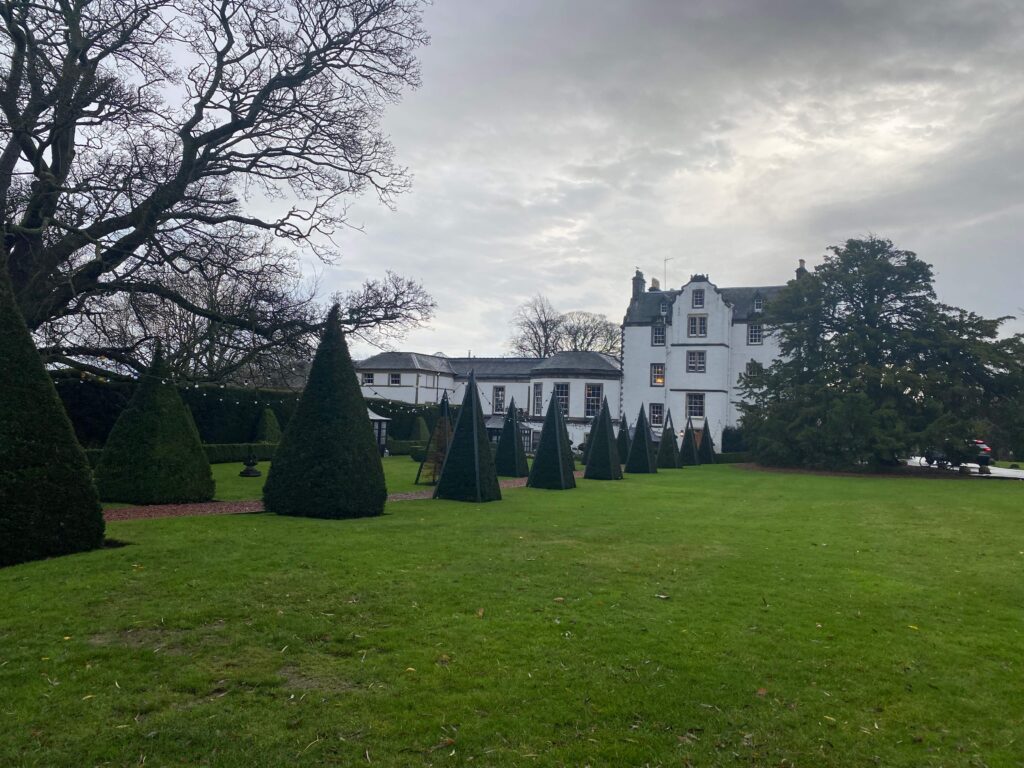
This mansion on the edge of Holyrood Park was a place where Edinburgh’s Enlightenment elite convened, Benjamin Franklin among them. Sir Alexander Dick, owner of Prestonfield, was a physician, seven times President of the Royal College of Physicians, and a founding member of the Royal Society of Edinburgh. He welcomed the leading thinkers of his age to his home.
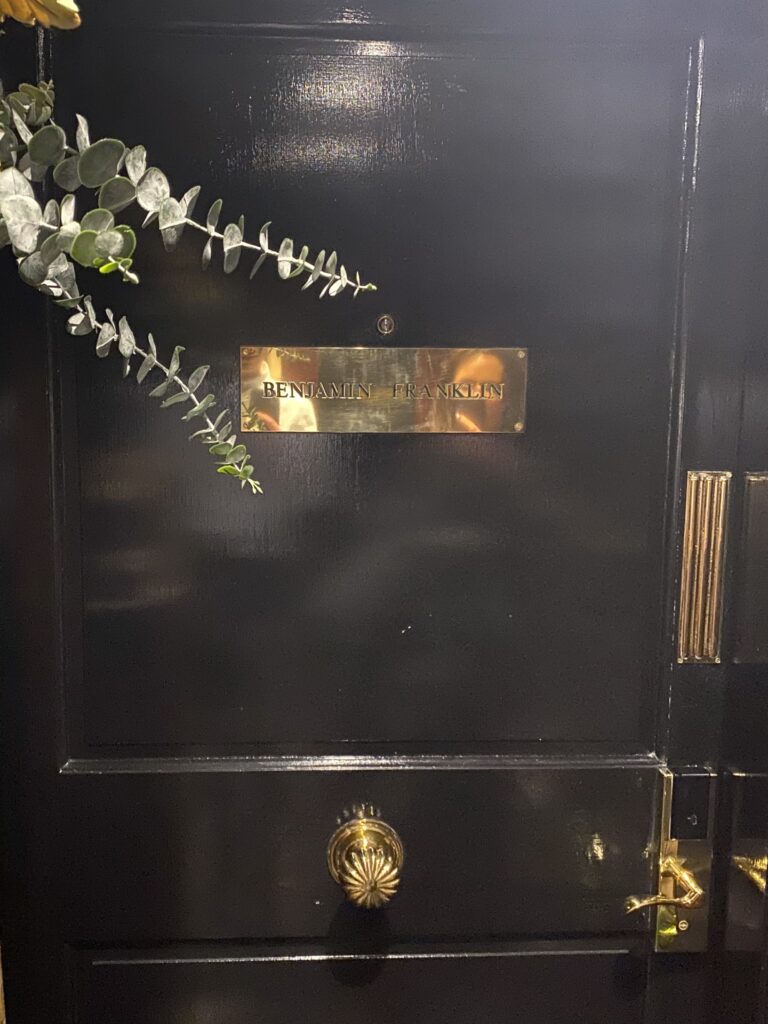
Franklin visited Prestonfield during his Edinburgh stays and the house, now a hotel, today honors that connection with a Benjamin Franklin Suite, named after the Founding Father who slept within its walls.
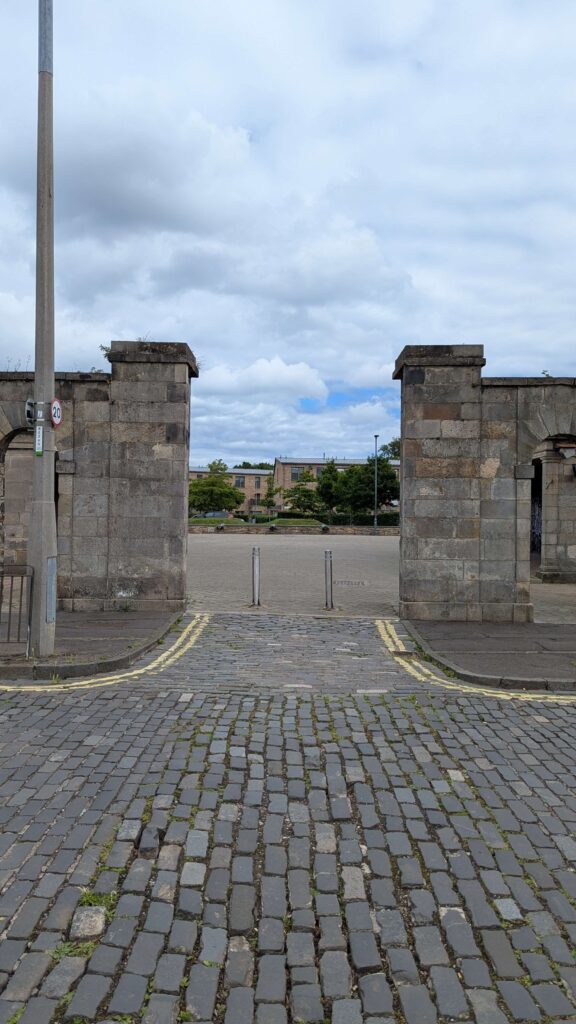
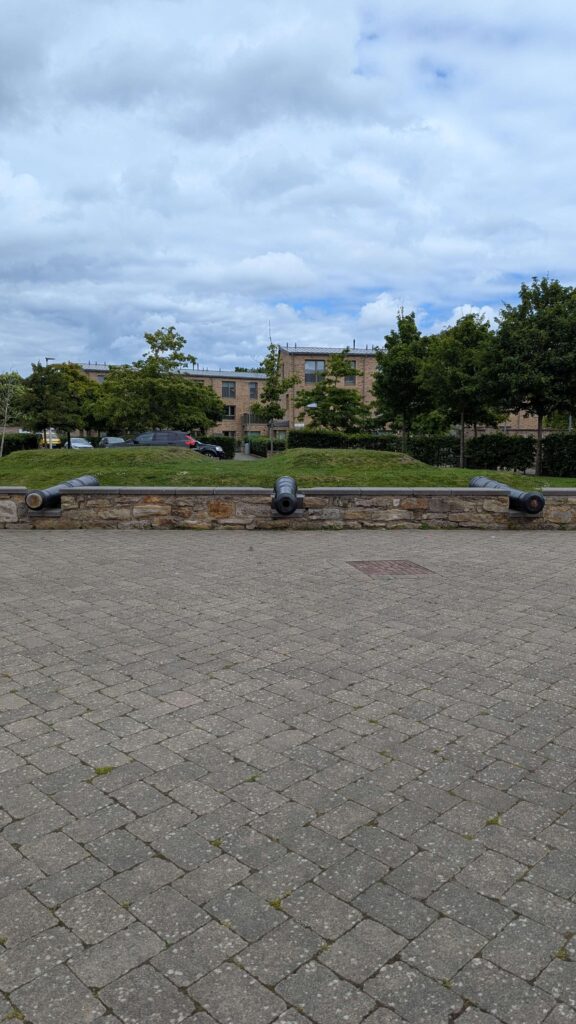
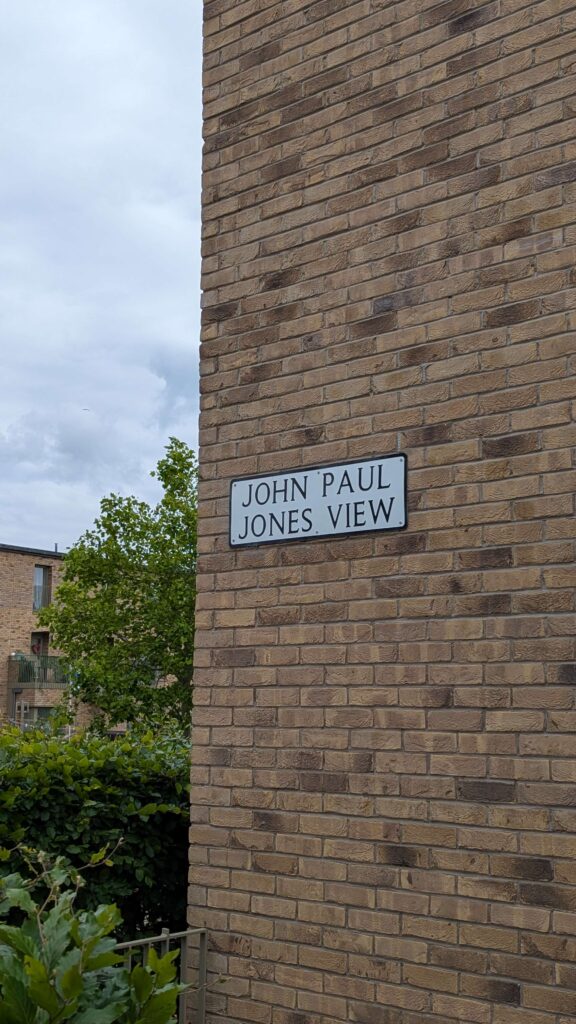
This street in Leith is named after one of the most audacious moments of the Revolutionary War. In September 1779, John Paul Jones, the Scottish-born “father of the U.S. Navy,” sailed a small fleet of American warships into the Firth of Forth and anchored off Leith, demanding a ransom of £200,000 from Edinburgh and threatening to bombard the port.
Banks locked their doors, the garrison closed the Castle portcullis, and church bells rang the invasion alarm. Only a sudden gale drove Jones back out to sea. In direct response, Leith Fort was built to defend the harbor.
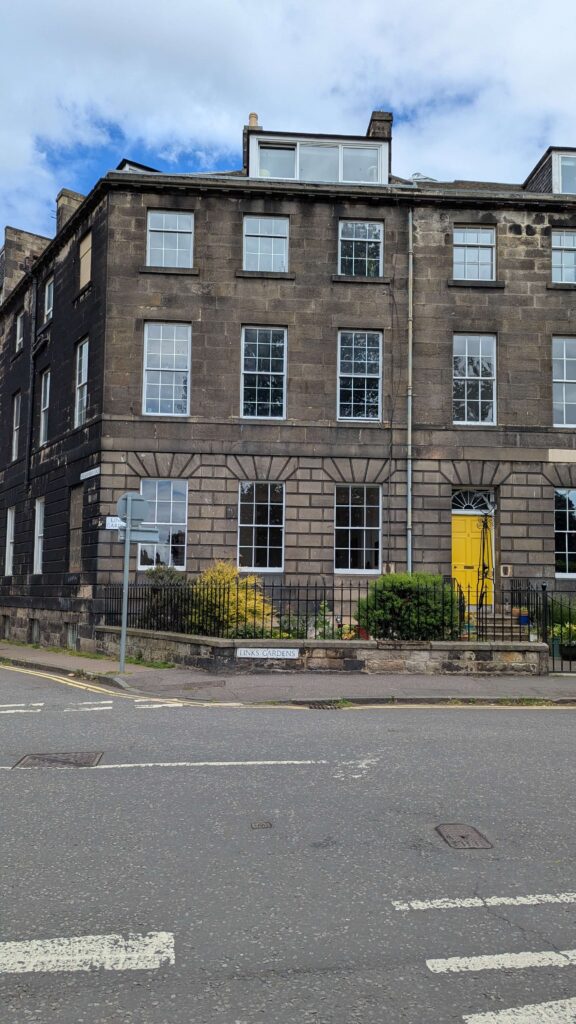
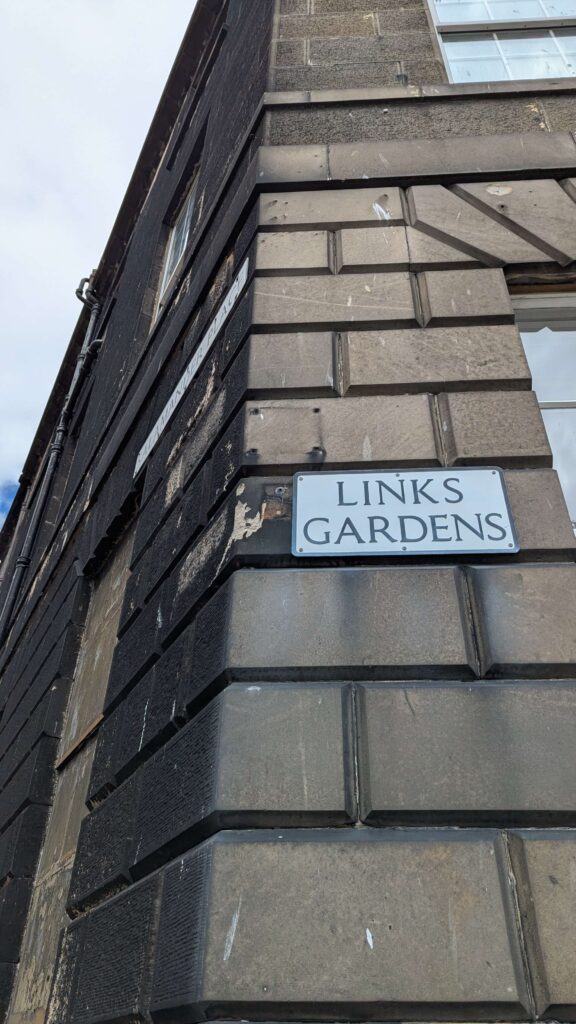
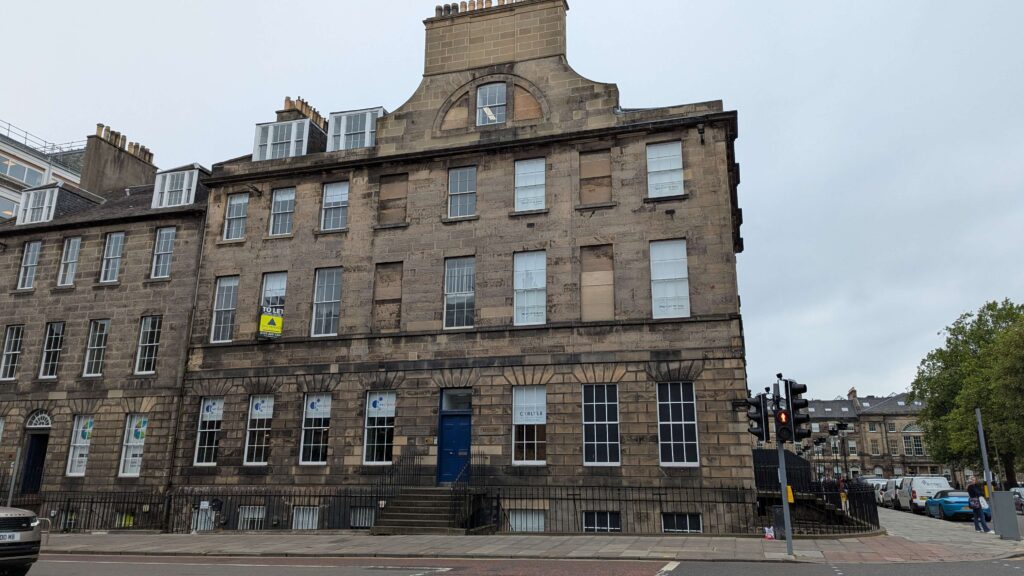
This street marks where the United States Government first planted its diplomatic flag in Scotland. On July 14, 1798, President John Adams appointed Harry Grant of South Carolina as the first U.S. Consul to Scotland. His first office was at 1 James Place at the address now known as Links Gardens.
The appointment came just fifteen years after America won its independence. This speed speaks to the pace at which the young republic began to maintain a presence at key trading posts to establish itself on the world stage. Over time, the United States consular network expanded across the mainland of Scotland, with consulates set up in Glasgow (1801-1965), Dundee (1834-1940), and Dunfermline (1871-1925); and consular agencies in Aberdeen (1866-1922), Greenock (1873-1914), Kirkcaldy (1878-1909), Galashiels (1882-1909), and Troon (1891-1921).
After fifty-six years in Leith, the U.S. Consulate crossed into Edinburgh in 1854, but it moved back to Leith in 1861. Ten different homes scattered around Leith followed, though the Consulate finally settled in Edinburgh in 1883, moving to its current home on Regent Terrace in 1950. Today, the Consulate is one of the longest-running continuous American diplomatic missions anywhere in the world.
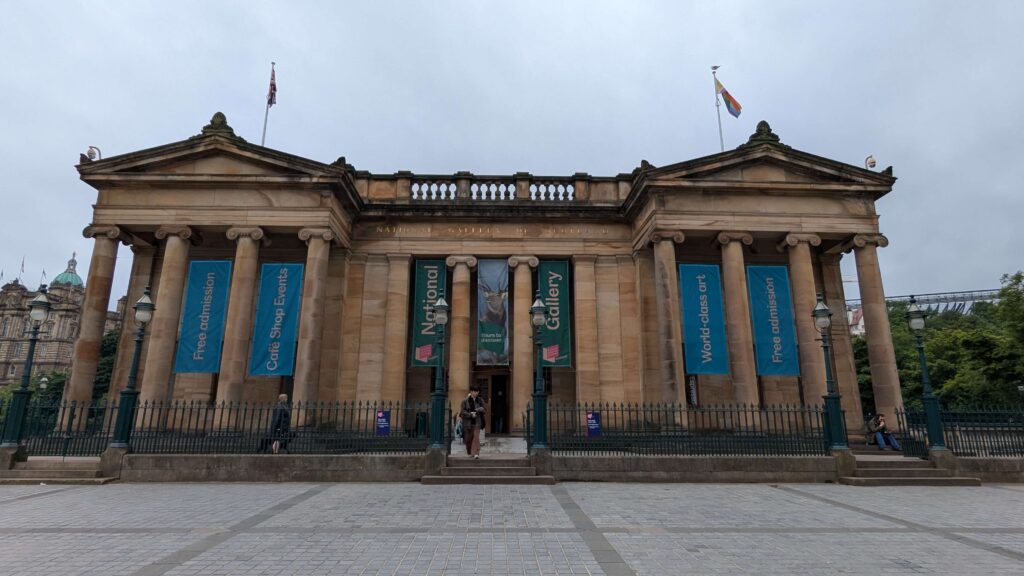
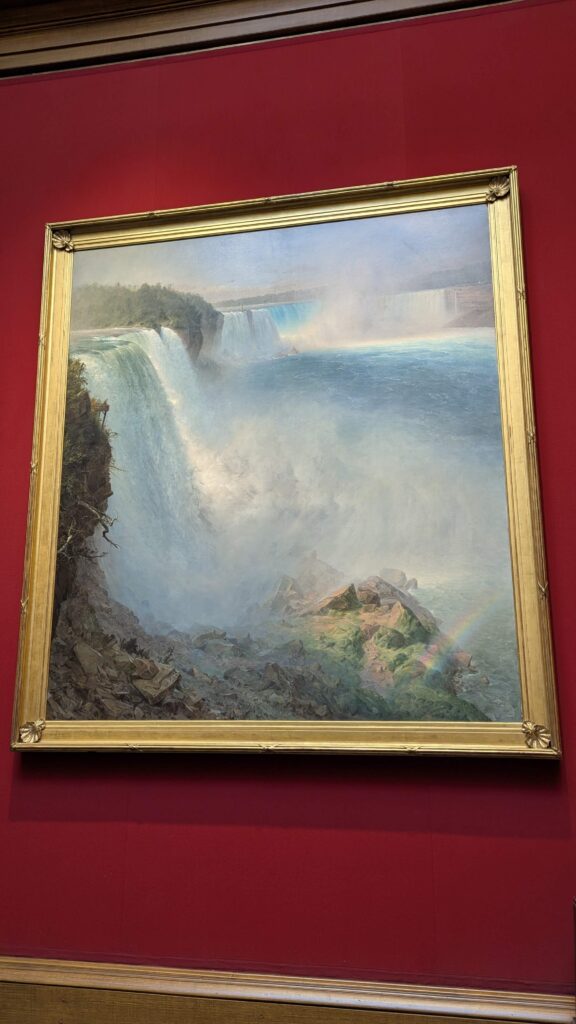
Hanging in Scotland’s national art collection is the only major work by Frederic Edwin Church in any European public collection: Niagara Falls, from the American Side (1867). Church was the leading painter of the Hudson River School and this vast canvas was commissioned by a New York art dealer, intended to represent America at the Universal Exhibition in Paris.
John Stewart Kennedy, who was born in Scotland but made his fortune in New York coal, steel, and banking, purchased the painting in 1887 with the apparent express purpose of gifting it to his native country. The painting hung unseen for almost a century before being restored to view in 1980.
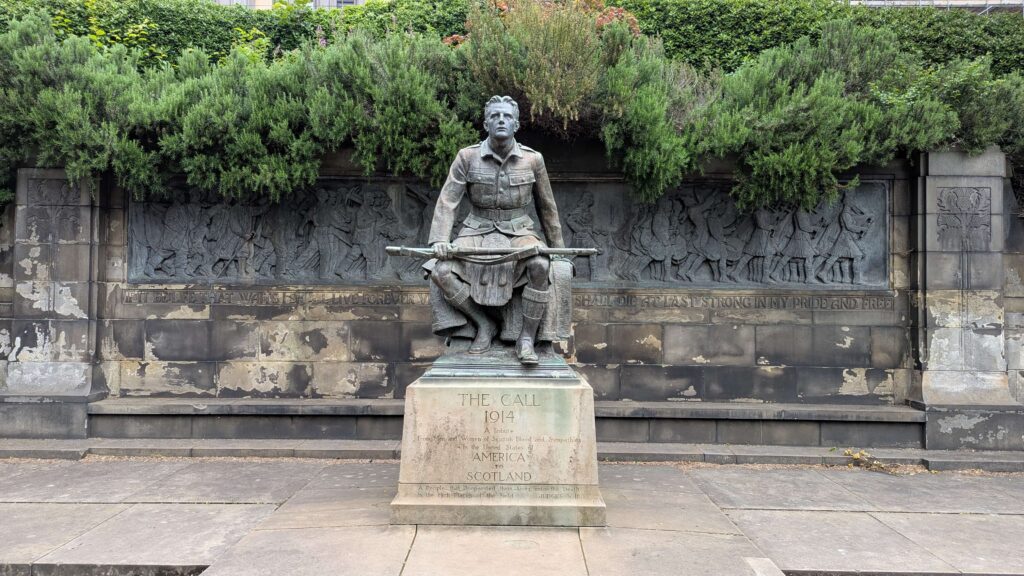
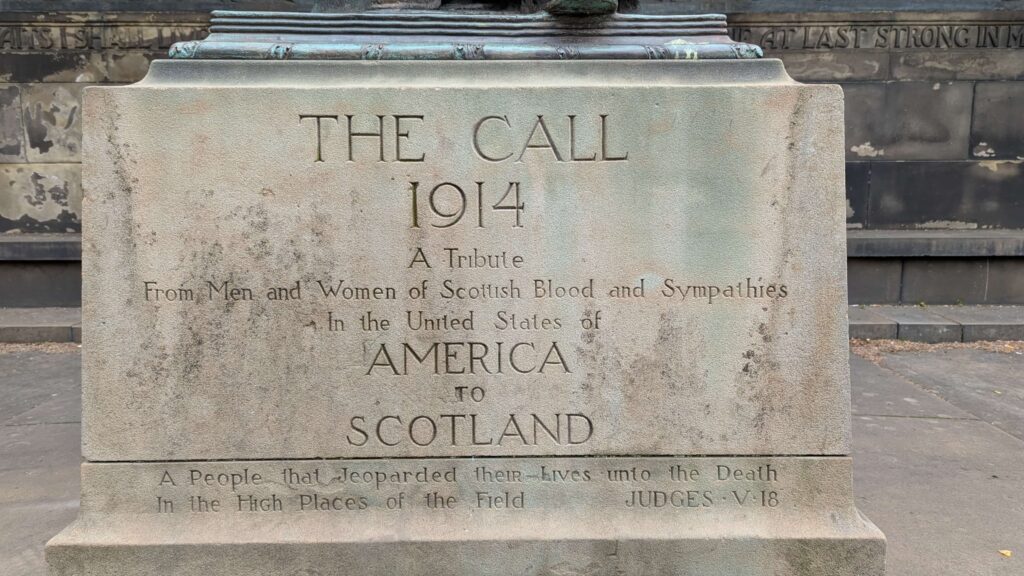
Unveiled in 1927 by the U.S. Ambassador to the United Kingdom, Alanson Houghton, the memorial was designed by the sculptor R. Tait McKenzie and cast at the Roman Bronze Works in Brooklyn, New York. It was funded entirely by men and women of Scottish descent in the United States.
A kilted soldier sits gazing up at Edinburgh Castle, rifle across his knees about to rise. Behind him, a sweeping bronze frieze shows miners, shepherds, fishermen, and clerks answering the call.
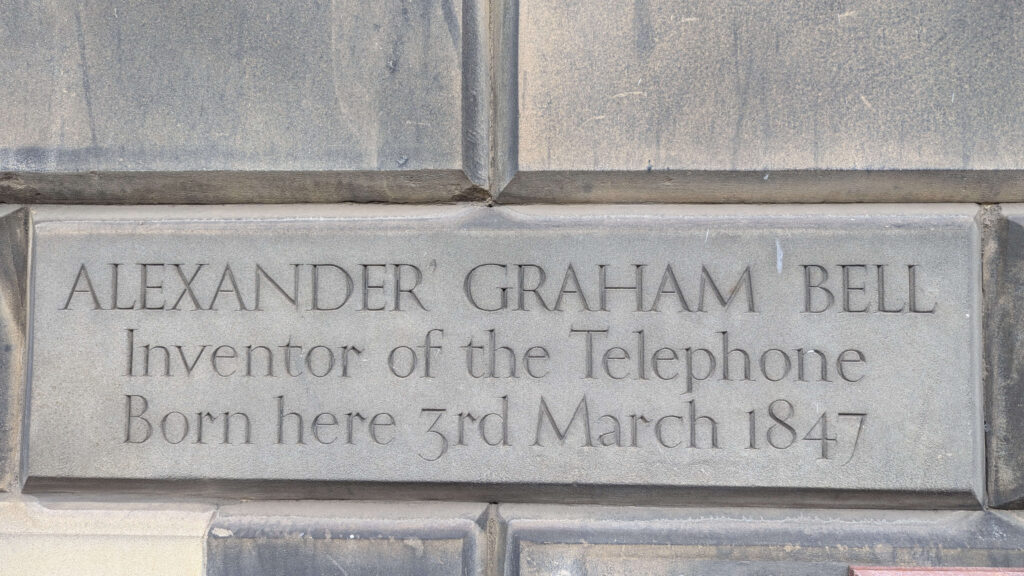
Alexander Graham Bell was born here on March 3, 1847. He left Edinburgh at 23, moved to Canada, then to Boston where, in 1876, he successfully demonstrated the world’s first practical telephone and filed the patent that would change the world.
Bell became an American citizen and co-founded the American Telephone & Telegraph Company (AT&T) in 1885. His lifelong passion was improving human communication across any barrier.
The telephone did not merely connect people across rooms; it connected continents and created the communications infrastructure of the modern world. Every smartphone, every data network, every streaming service traces its lineage to the patent filed by a man born behind this door.
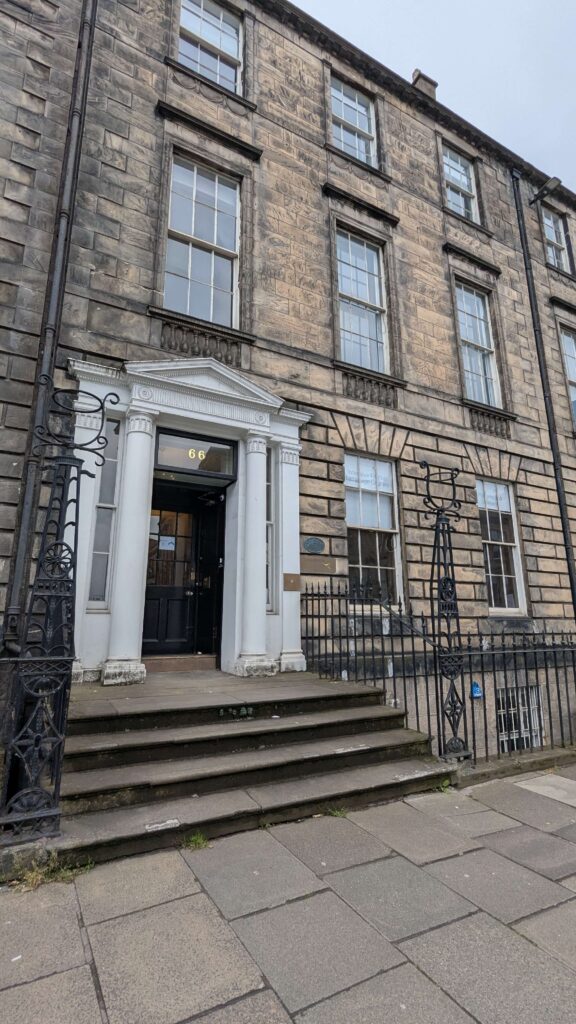
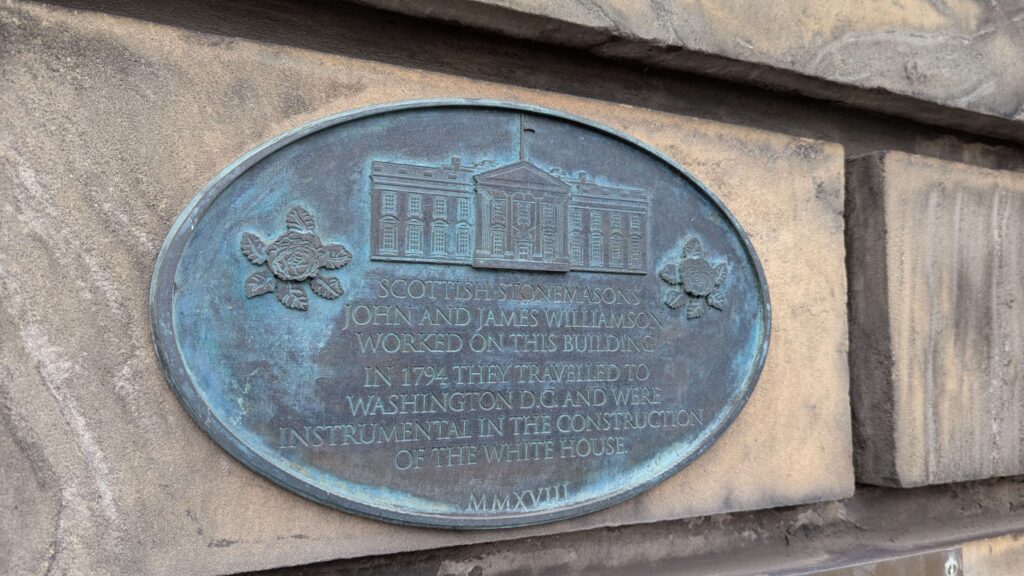
A commemorative plaque on this New Town building marks the departure point of one of the most remarkable stories in the Edinburgh-America relationship. John and James Williamson were among six members of Edinburgh Masonic Lodge No. 8 who worked here as stonemasons before making the journey to Washington D.C. in 1794 to help build the White House.
From the 17th-18th century, Scottish stonemasons were among the most skilled in the world, and the Washington commissioners actively recruited them, offering good wages and paid travel. Once in America, they carved elaborate decorations into the facade, including the iconic “Double Scottish Rose,” cultivated by the Royal Botanic Garden Edinburgh.
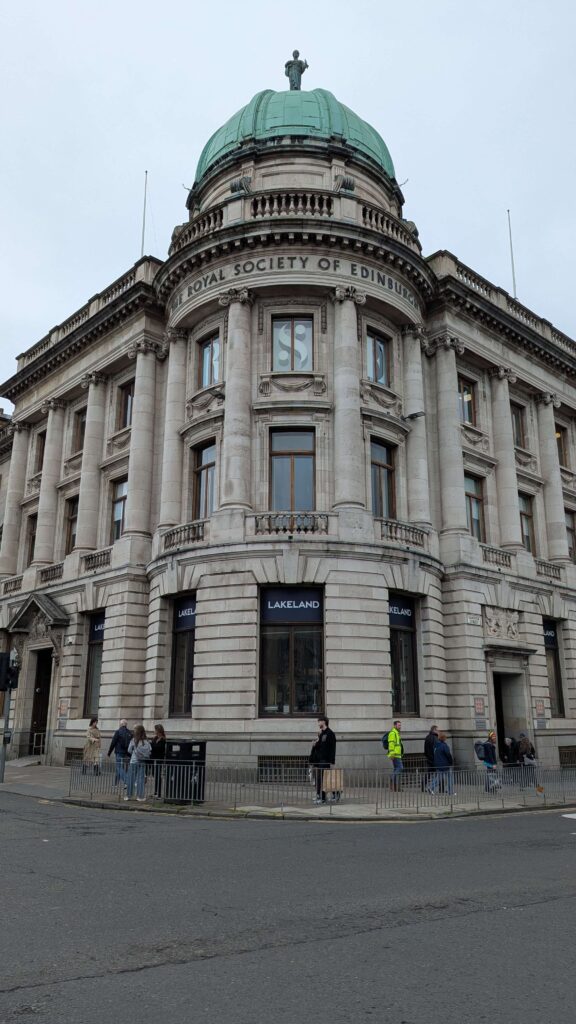
The Royal Society of Edinburgh is Scotland’s national academy of science and letters, and Benjamin Franklin is among its most distinguished former fellows. Franklin was elected a fellow of the Philosophical Society of Edinburgh, the RSE’s predecessor body, during his Edinburgh visits; the RSE itself received its Royal Charter in 1783, three years after Franklin’s last contact with the group. Previous fellows of the RSE include James Clerk Maxwell, James Watt, and Thomas Reid, alongside Franklin, a roll call that spans the Scottish Enlightenment and the making of the modern world.
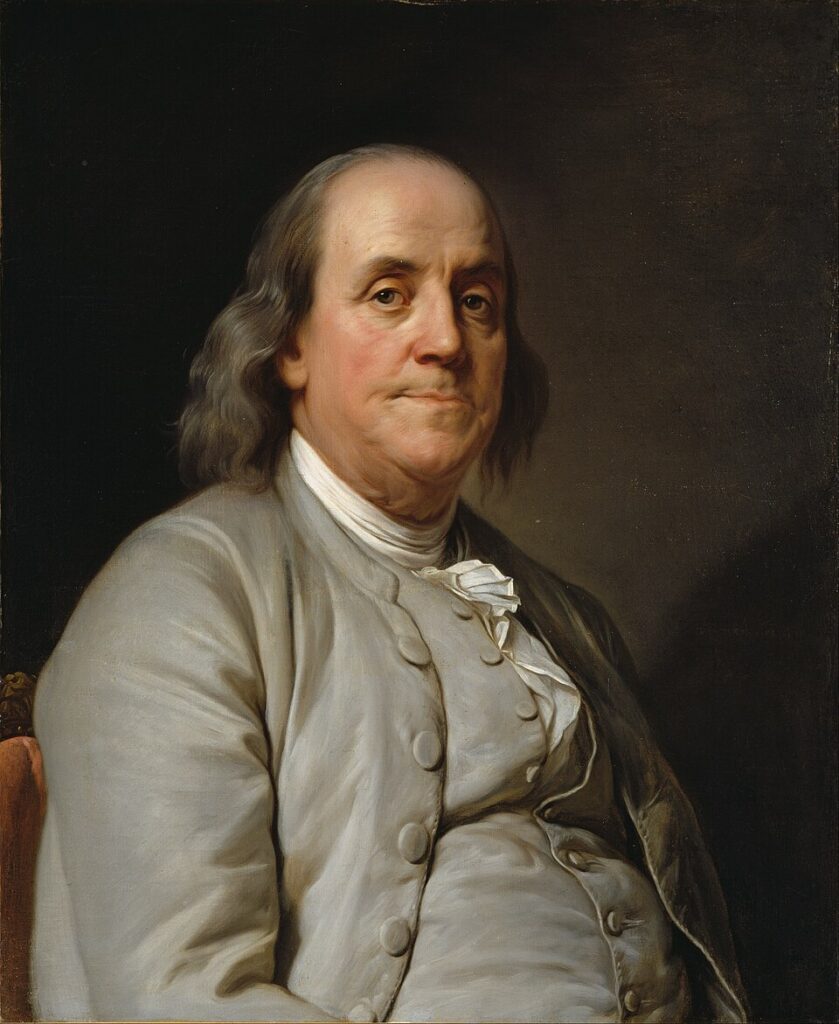
So deep was Benjamin Franklin’s attachment to Scotland that the Founder Father once stated, “Did not strong connections draw me elsewhere, I believe Scotland would be the country I would choose to end my days in.”
A plaque marks where David Hume, one of Scotland’s greatest philosophers, lived from 1771 until his death in 1776.
It was also here, in 1771, that Benjamin Franklin lodged with Hume on his second Edinburgh visit. The two men were among the most brilliant of their age, and their friendship was a great intellectual bond of the Enlightenment. Franklin had first met Hume in 1759 and called Edinburgh’s philosophers “truly great men.” Hume, for his part, regarded Franklin as a great intellect and Franklin and Hume corresponded until Hume’s death in 1776.
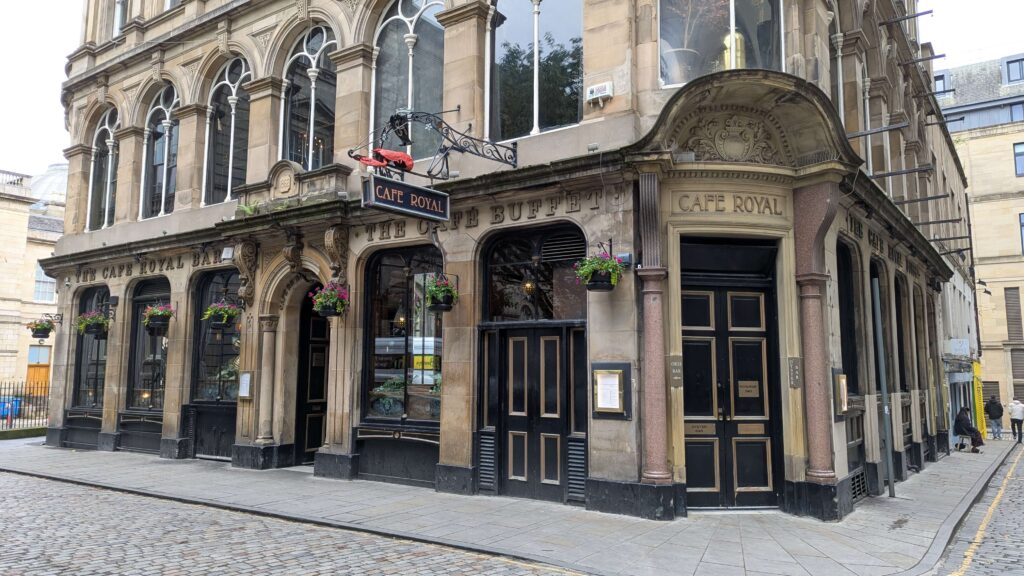
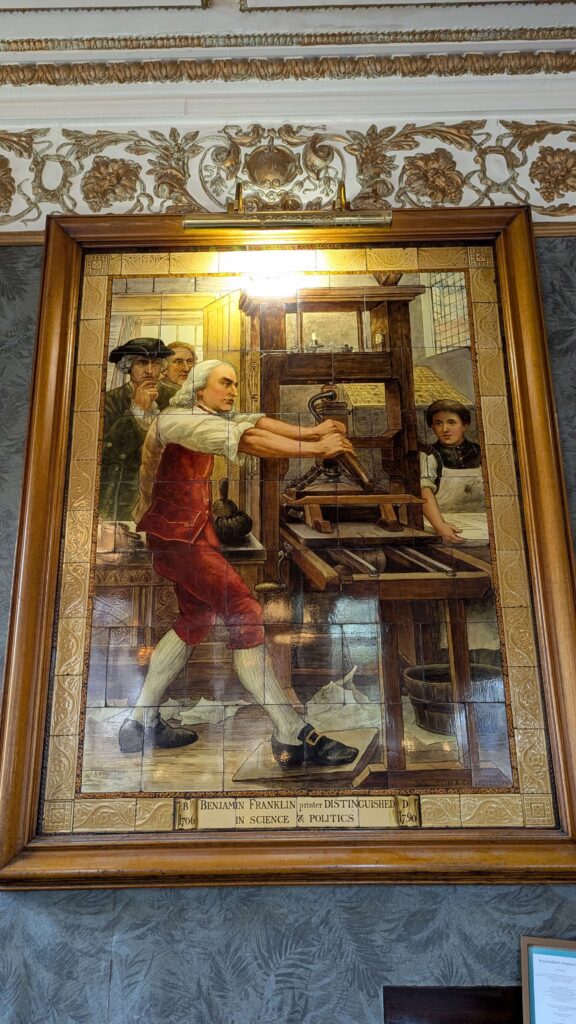
Step inside this Victorian pub and look up at the walls. Among the ceramic tile murals celebrating history’s great innovators is a depiction of Benjamin Franklin at a printing press. This is one of six panels acquired at Edinburgh’s International Exhibition of Science, Industry and Art in 1886.
Franklin is here in apt company: alongside Watt, Faraday, Stephenson, Caxton, and Peel. The Café Royal’s owners placed him among the leading lights of human ingenuity, honoring the scientist, inventor, diplomat, and printer Founding Father in the heart of Edinburgh’s New Town.
Franklin visited Edinburgh twice, in 1759 and 1771, describing his first stay as “six weeks of the densest happiness I have ever met with.”