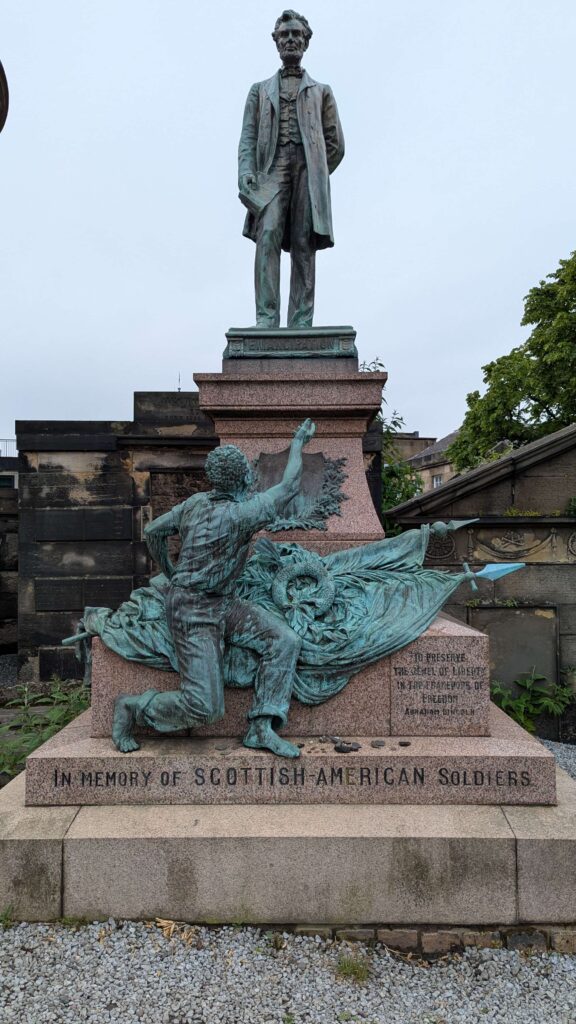
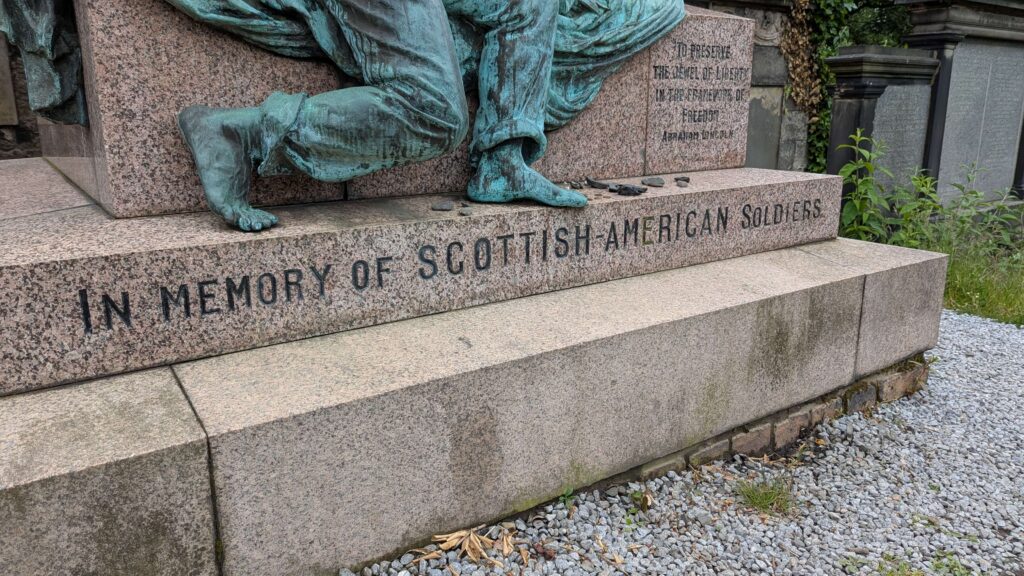
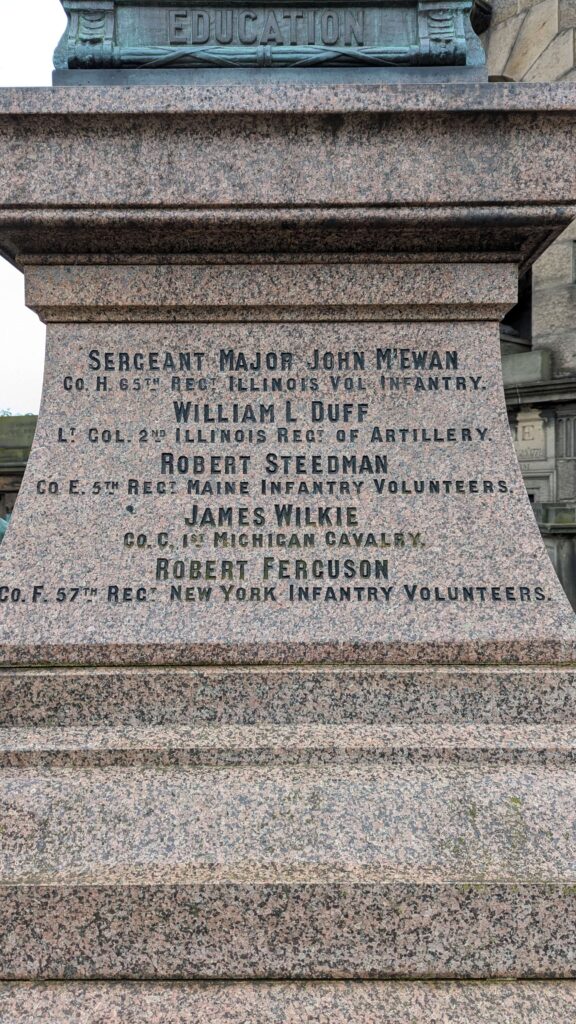
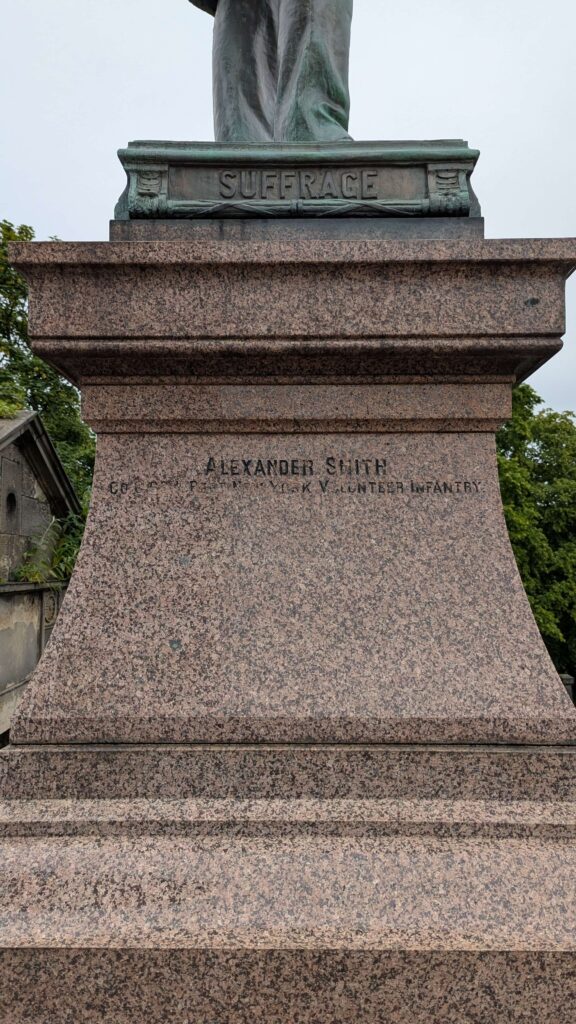
This cemetery contains the only monument to Abraham Lincoln outside the United States and commemorates Scottish-American soldiers killed in the Civil War. Its purpose was to memorialize six Scottish soldiers who had fought in the Union Army during the American Civil War and celebrate the emancipation legacy of Abraham Lincoln. As reported in the Scotsman on Monday, August 21, 1893, the striking status was unveiled by U.S. Consul Wallace Bruce, accompanied by a band that played the “U.S. National Anthem,” “Rule Britannia,” “Hail Caledonia!” and “Auld Lang Syne.”
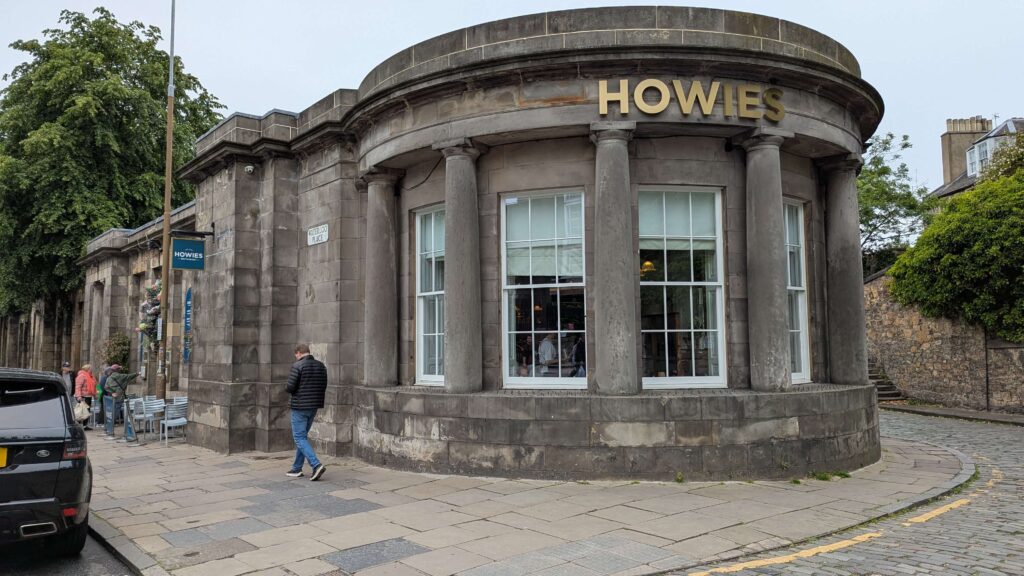
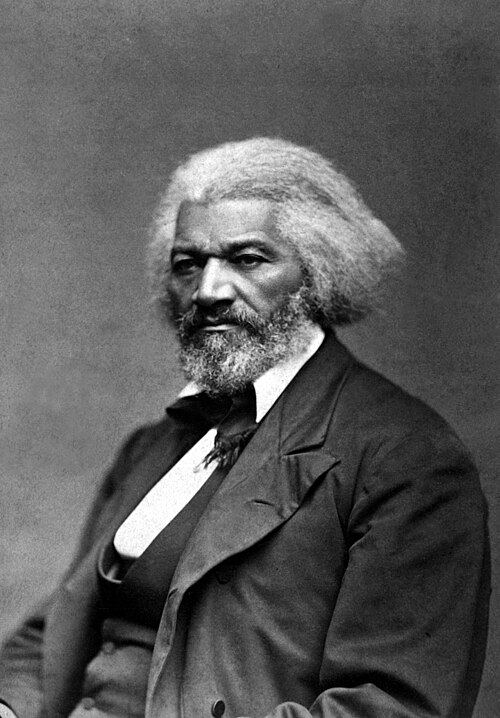
On May 1, 1846, a formerly enslaved man from Maryland stood in the Waterloo Rooms at this address and addressed a public breakfast hosted by the Edinburgh Ladies’ Emancipation Society. Frederick Douglass, escaped slave, author, orator, and the most photographed American of the nineteenth century, had come to Scotland as part of a British tour, and Edinburgh became one of his most important platforms.
Douglass spoke here and across the city and Scotland demanding the Free Church of Scotland “send back the money” it had received from slaveholding congregations. His Edinburgh campaign helped turn Scottish opinion against slavery, contributing to the international pressure that contributed to abolition. You can also find a portrait of Douglass at 33 Gilmore Place, near the location of where he stayed while in Edinburgh (see also our Black Live Matters trail).
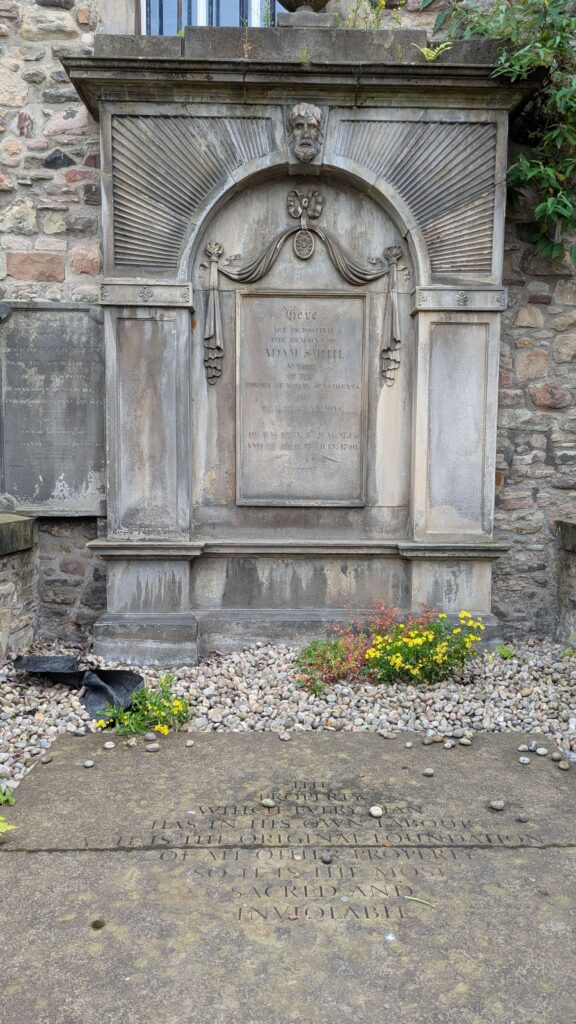
In this churchyard lies the man whose ideas shaped American capitalism. Adam Smith published The Wealth of Nations in 1776, the same year as the Declaration of Independence, and the two documents together helped define the intellectual architecture of the modern world.
Smith argued that free exchange, the division of labor, and self-interest channeled through markets could generate prosperity far more effectively than mercantilist state control. George Washington owned a copy. Alexander Hamilton, the first U.S. Treasury Secretary, drew on Smith while building his own ideas on how to order America’s financial system.
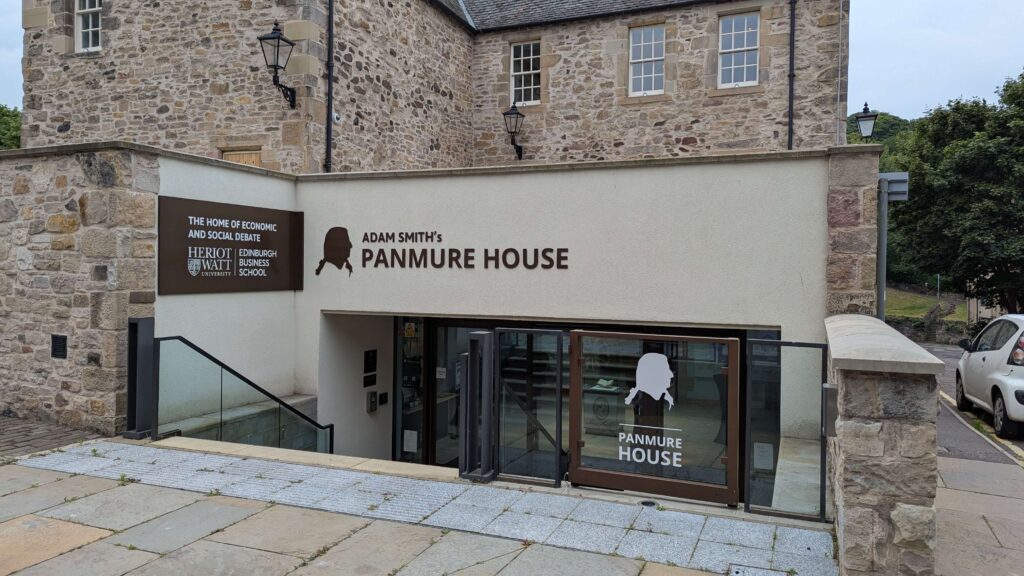
After finding the grave, head over to 4 Lochend Close to visit Panmure House, a 17th century townhome which served as the residence of Adam Smith from 1778 until his death in 1790. Now a part of Heriot-Watt University, Panmure House is where Smith finished the later editions of his magnus opus.
Note: The map directions take you to Panmure House; Smith’s grave is located next to the Canongate Kirk and Kirkyward (coordinates 55.95166870613089, -3.1788883917621726).
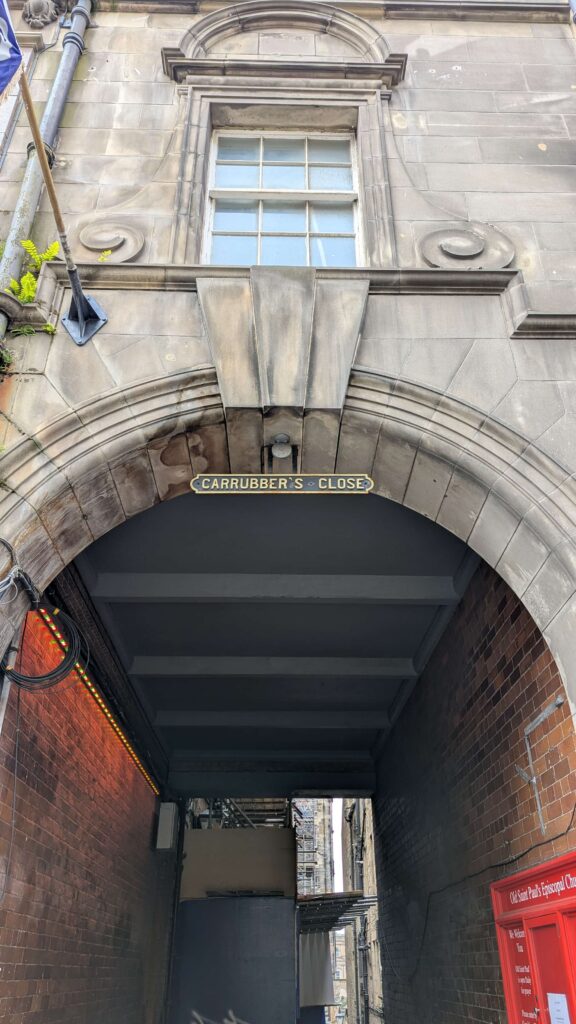
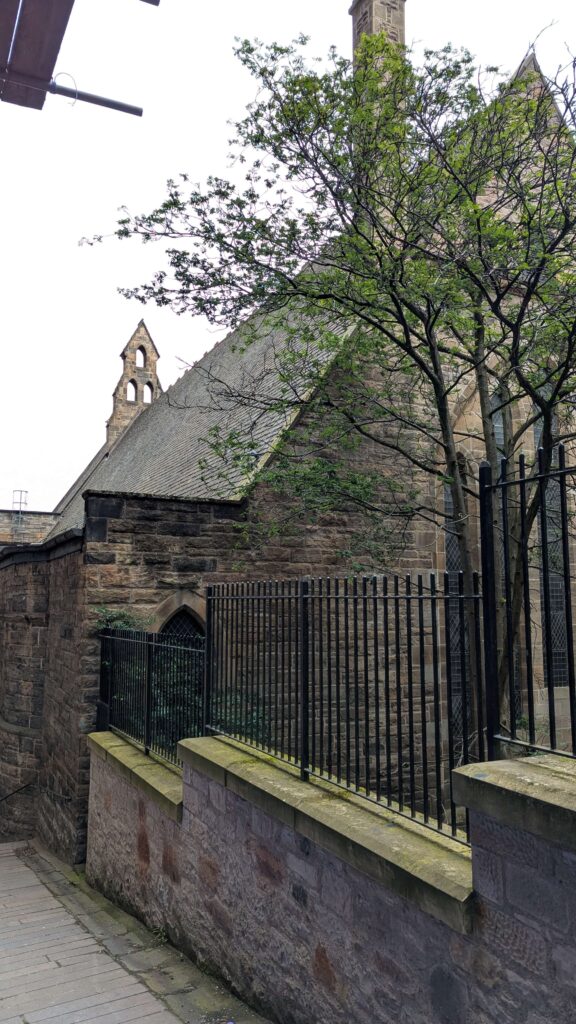
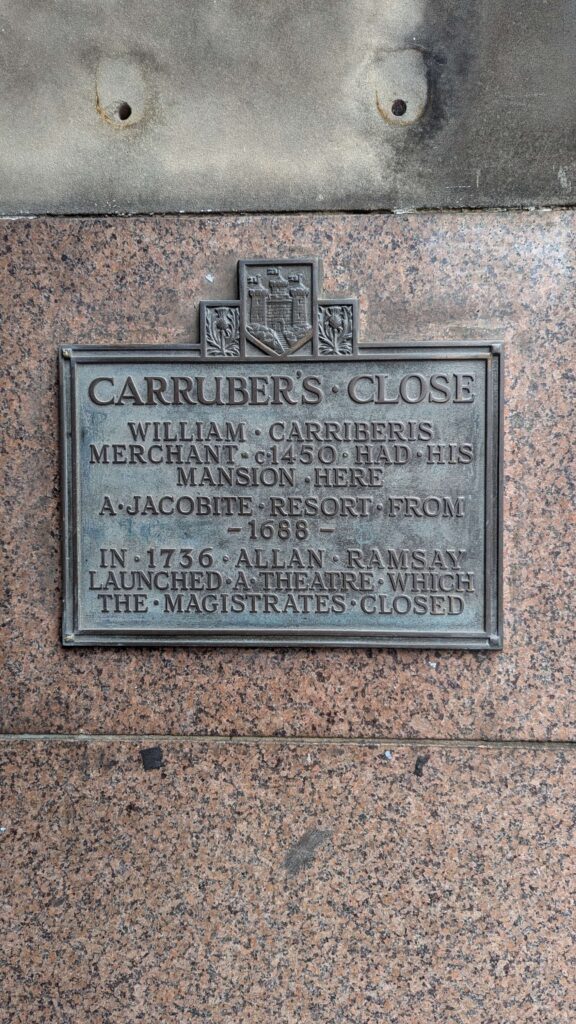
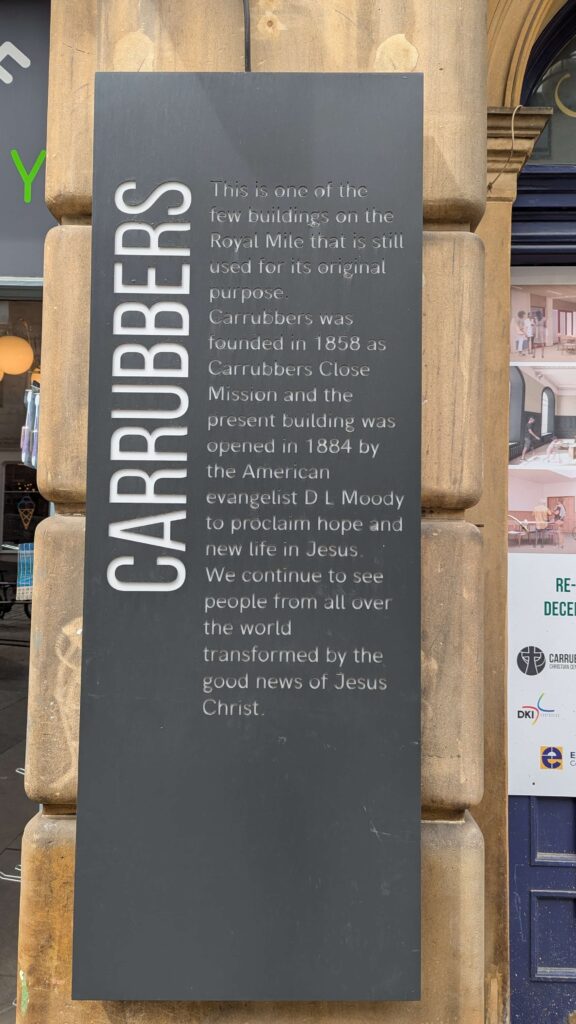
In 1872, Dwight L. Moody, a self-educated shoe salesman from Massachusetts turned global preacher, visited during a revival campaign and was so struck by the Carrubbers Close Mission, which did not have a permanent home, that he declared: “You can’t run a mission on air!” He raised £10,000 (around £1 million today), laid the foundation stone himself in 1883, and preached the building’s first sermon.
Moody’s Edinburgh campaigns of the 1870s and 1880s helped shape Scottish religious and social life by raising church attendance, inspiring welfare work among the poor, and influencing a generation of ministers. Ira Sankey, who shared a close association with Moody, is believed to have introduced gospel music to Scotland.
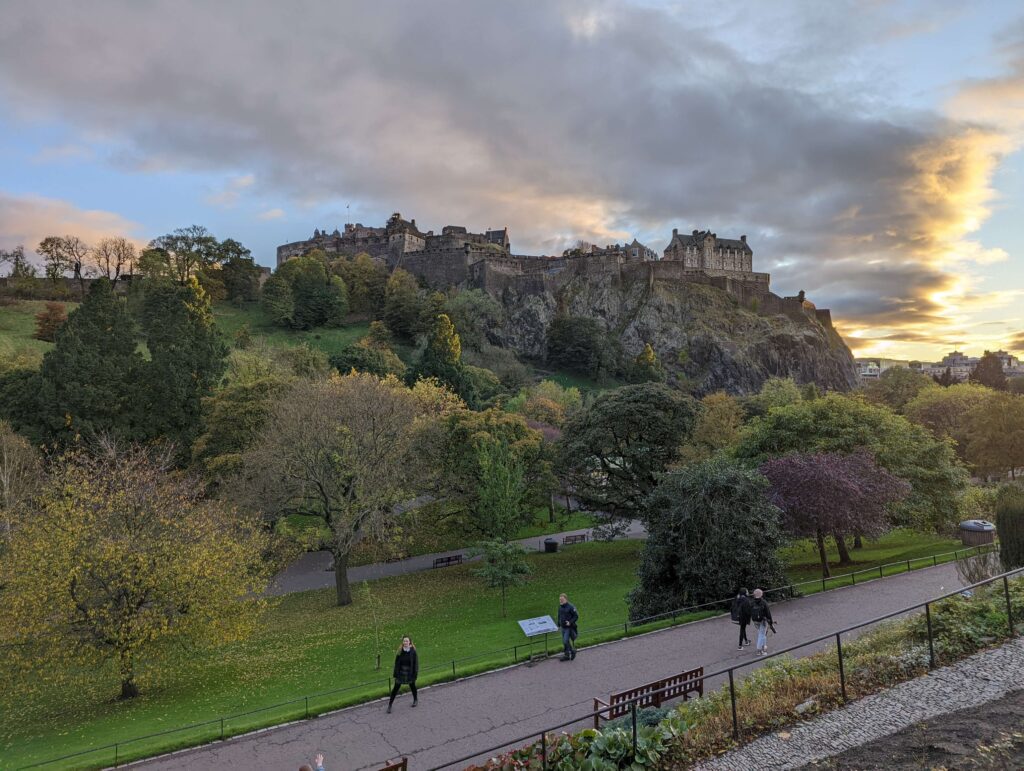
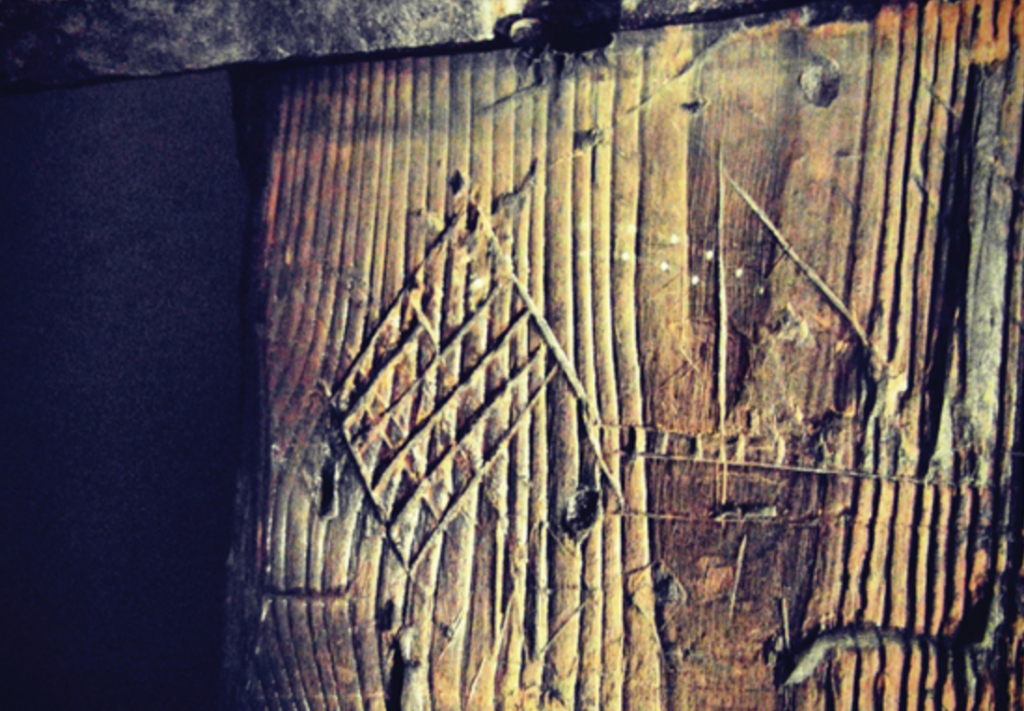
Edinburgh Castle held prisoners of war during the American Revolutionary War and among them were captured American sailors. One left a remarkable mark: scratched into the heavy wooden prison doors is what is believed to be one of the earliest known depictions of the Stars and Stripes, carved by a prisoner who likely never saw his new nation’s flag officially adopted.
The doors are now on display inside the castle. This small act of defiance, a sailor affirming his allegiance to a republic that barely existed, is a quietly extraordinary artefact of the war that created America. It reminds us that the struggle for independence was not abstract: it was personal and reached all the way to the prisons of Edinburgh’s formidable castle.
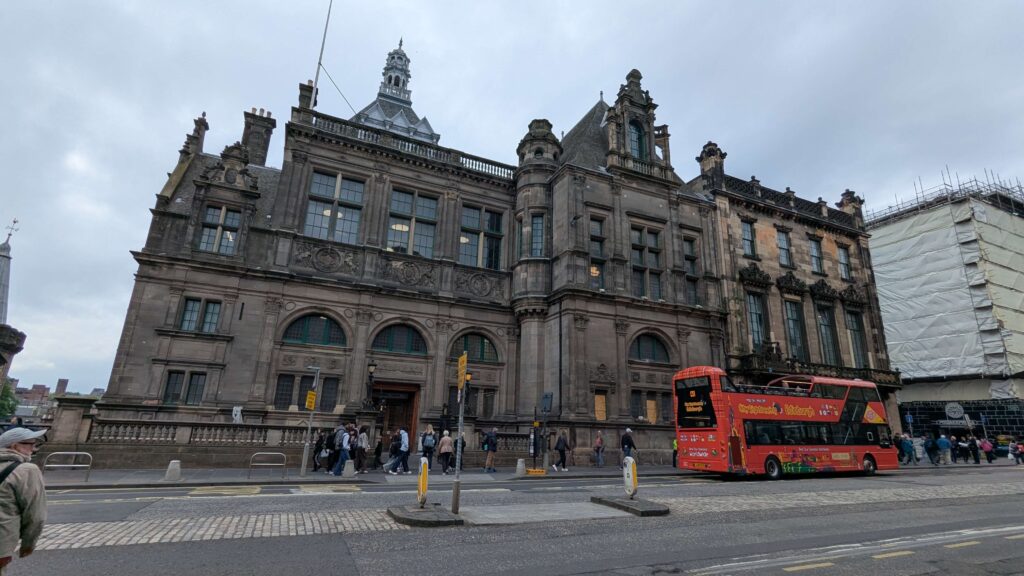
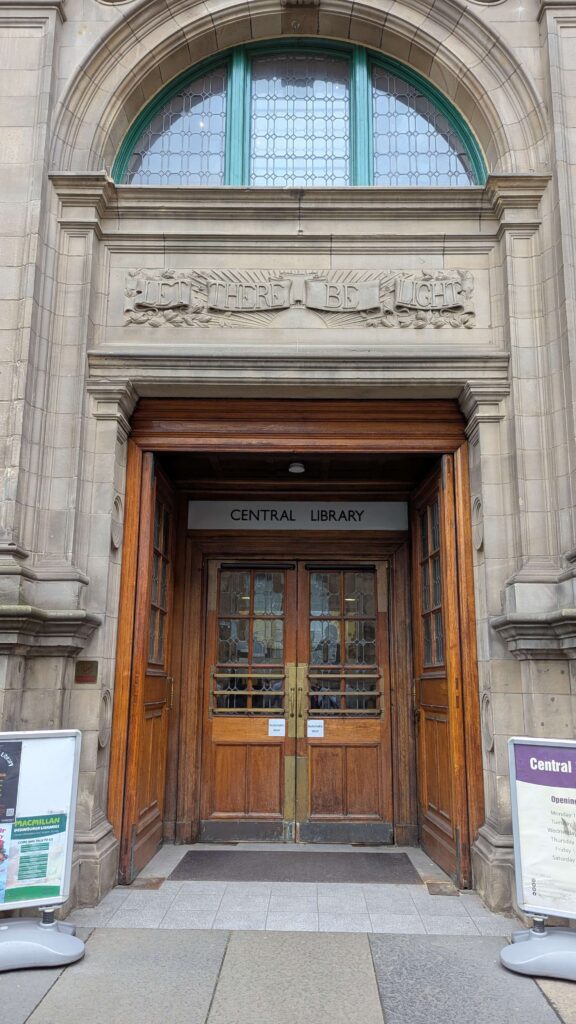
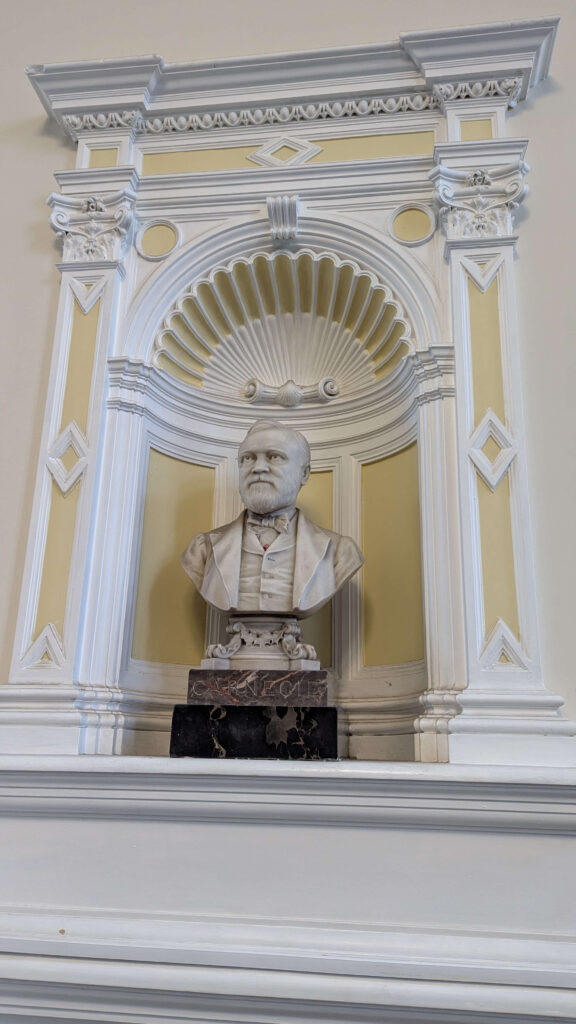
This building, the most-used public library in Edinburgh, was a gift from Andrew Carnegie, who built one of America’s greatest fortunes and then gave most of it away. Carnegie was born in Dunfermline in 1835, emigrated to Pennsylvania, and became a steel magnate. His philanthropy was on a scale the world had never seen, with over $350 million donated by his death, including more than 3,000 public libraries worldwide.
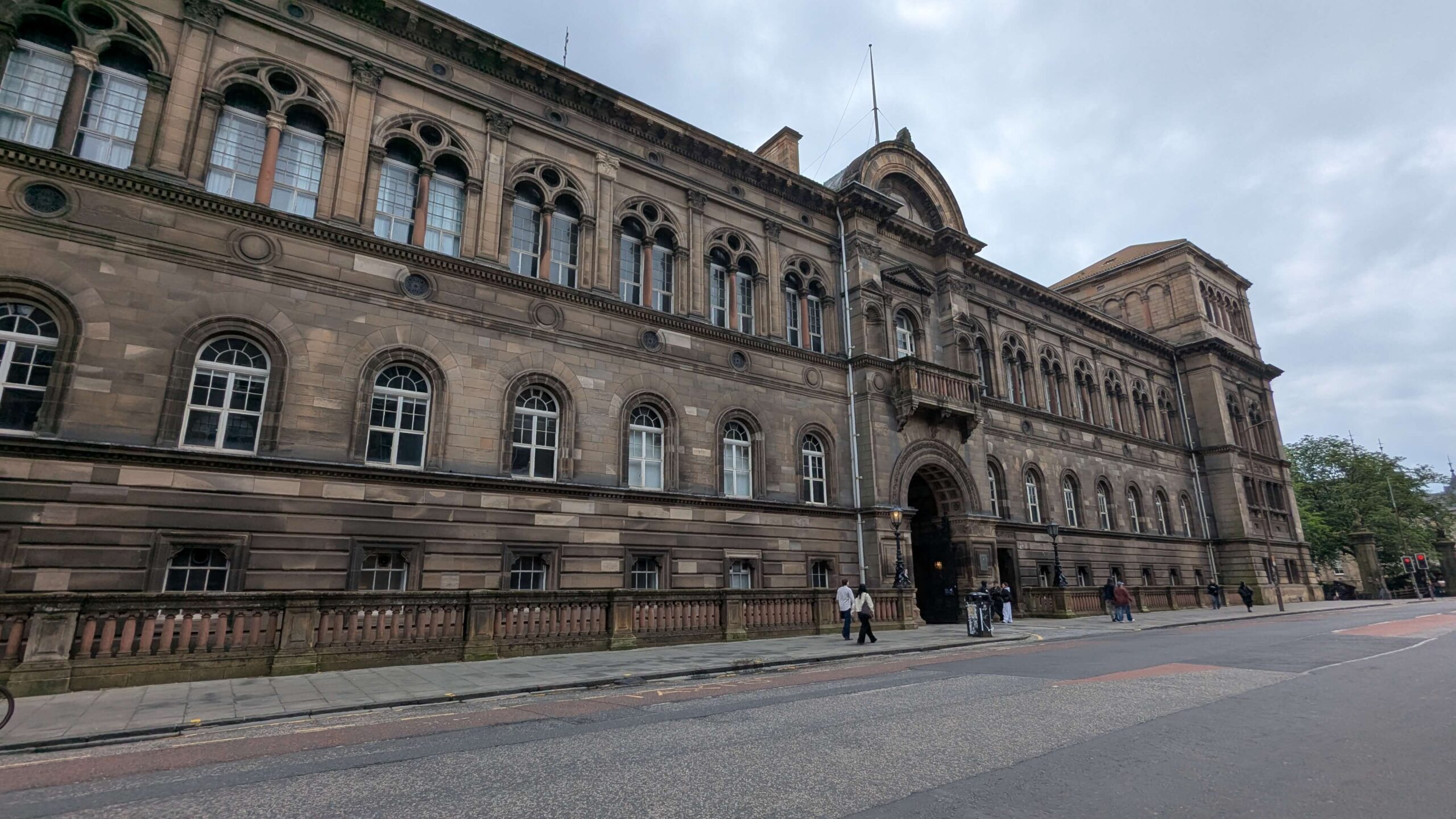
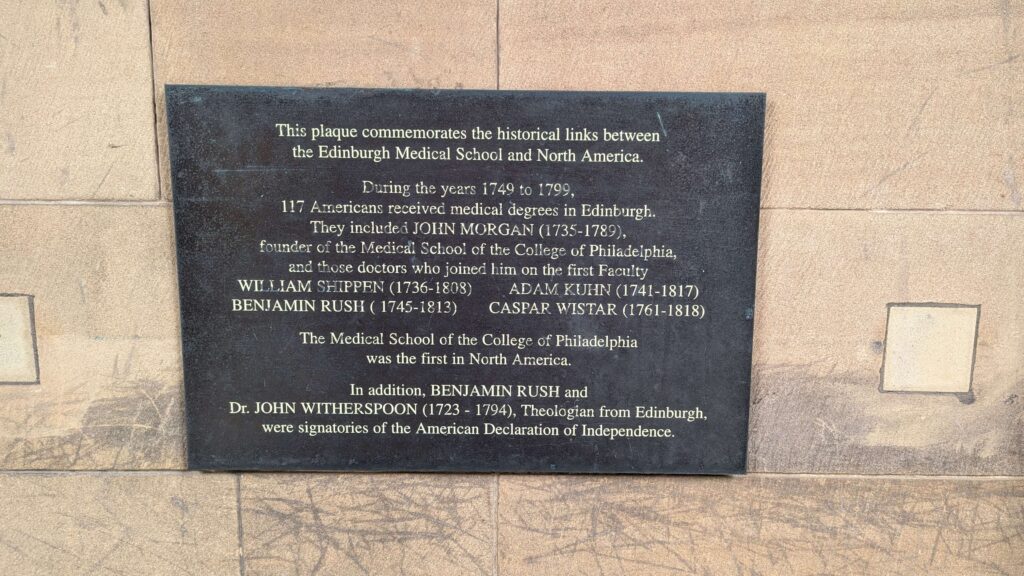
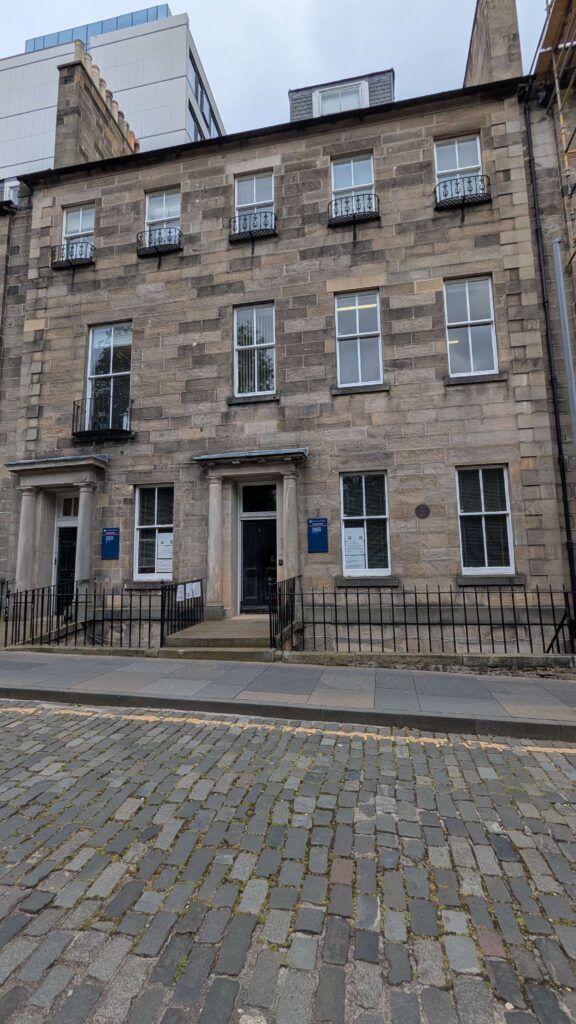
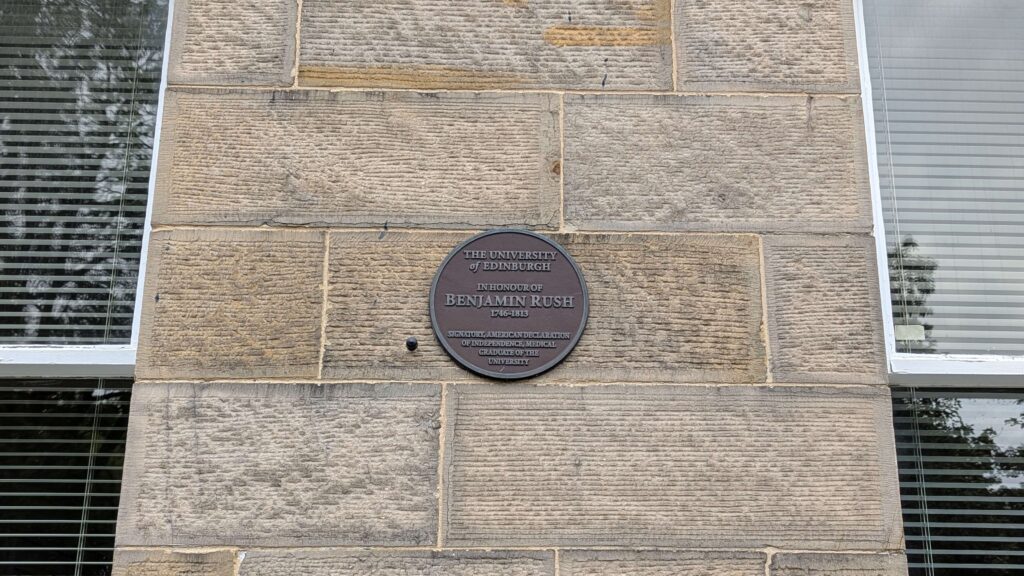
A plaque on the facade of the Old Medical School on Teviot Place marks one of the most direct connections between Edinburgh and the creation of the United States. Two signatories of the Declaration of Independence, Benjamin Rush and John Witherspoon, studied at the University of Edinburgh, and this building stands at the heart of the medical school where Rush spent what he called “the most important two years of my life.”