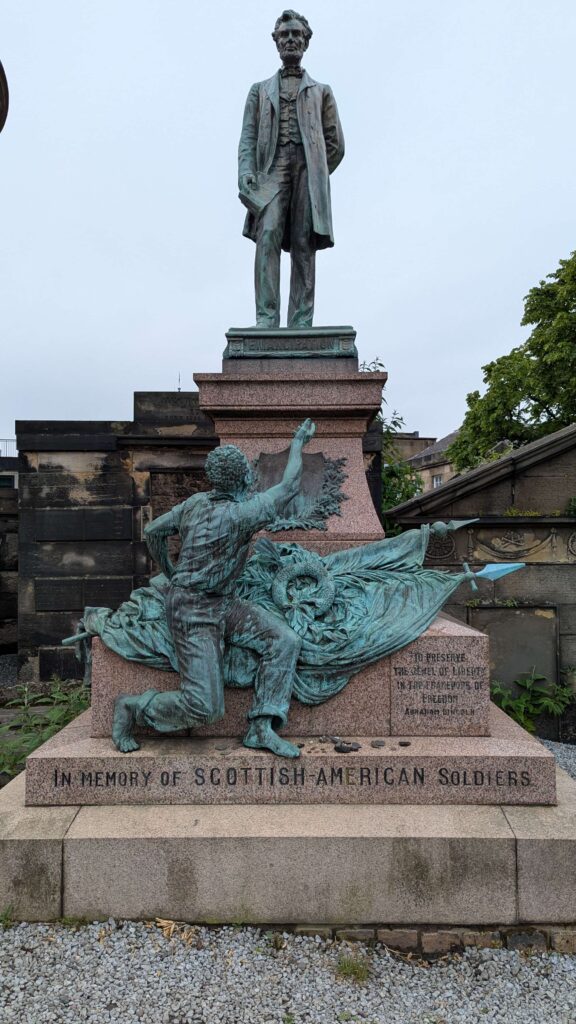
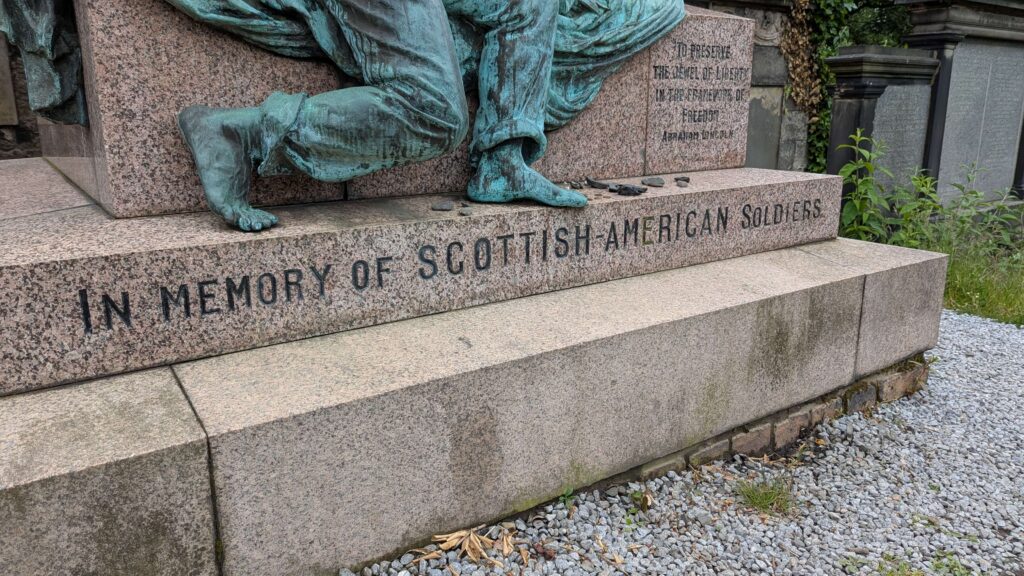
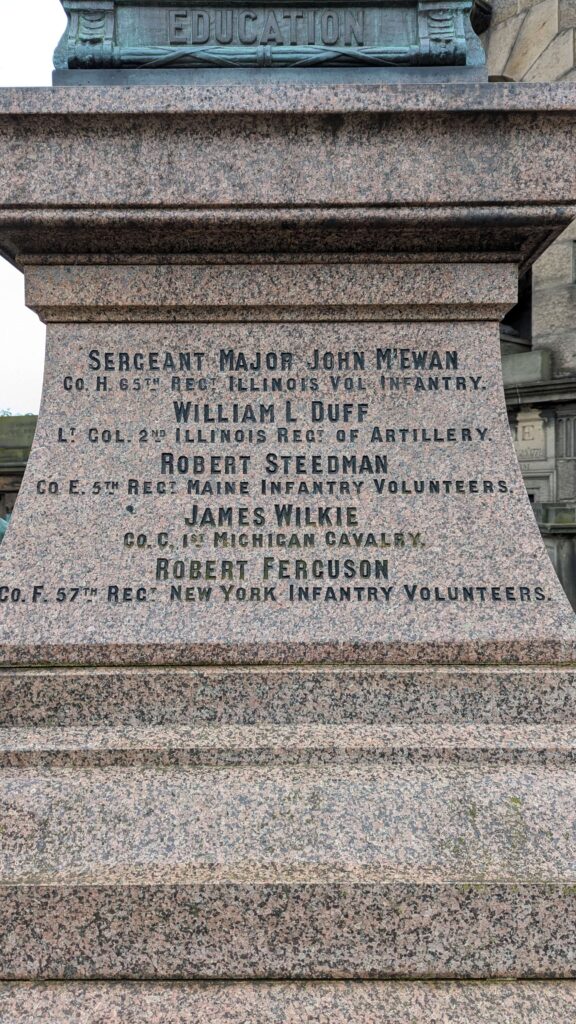
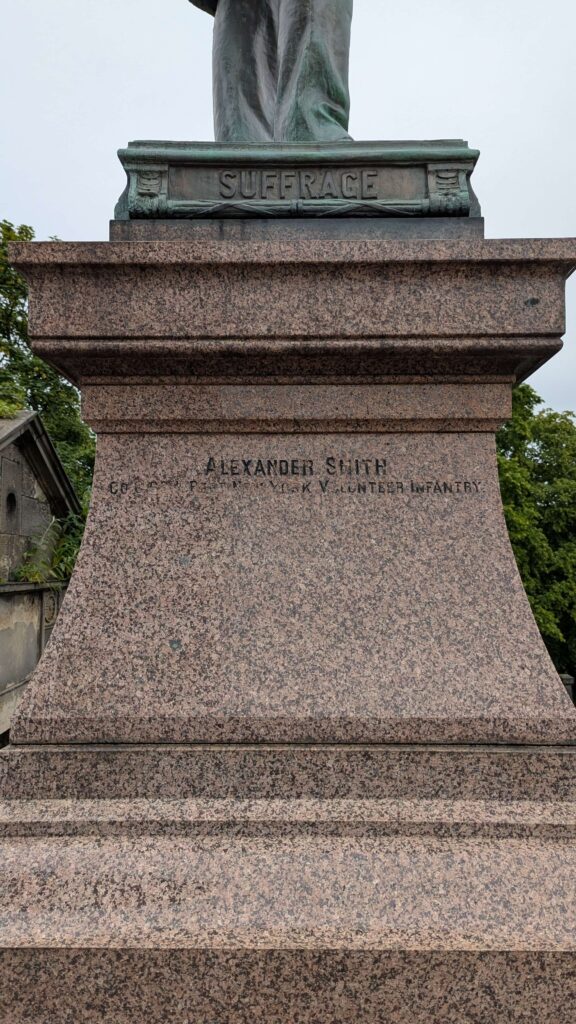
This cemetery contains the only monument to Abraham Lincoln outside the United States and commemorates Scottish-American soldiers killed in the Civil War. Its purpose was to memorialize six Scottish soldiers who had fought in the Union Army during the American Civil War and celebrate the emancipation legacy of Abraham Lincoln. As reported in the Scotsman on Monday, August 21, 1893, the striking status was unveiled by U.S. Consul Wallace Bruce, accompanied by a band that played the “U.S. National Anthem,” “Rule Britannia,” “Hail Caledonia!” and “Auld Lang Syne.”
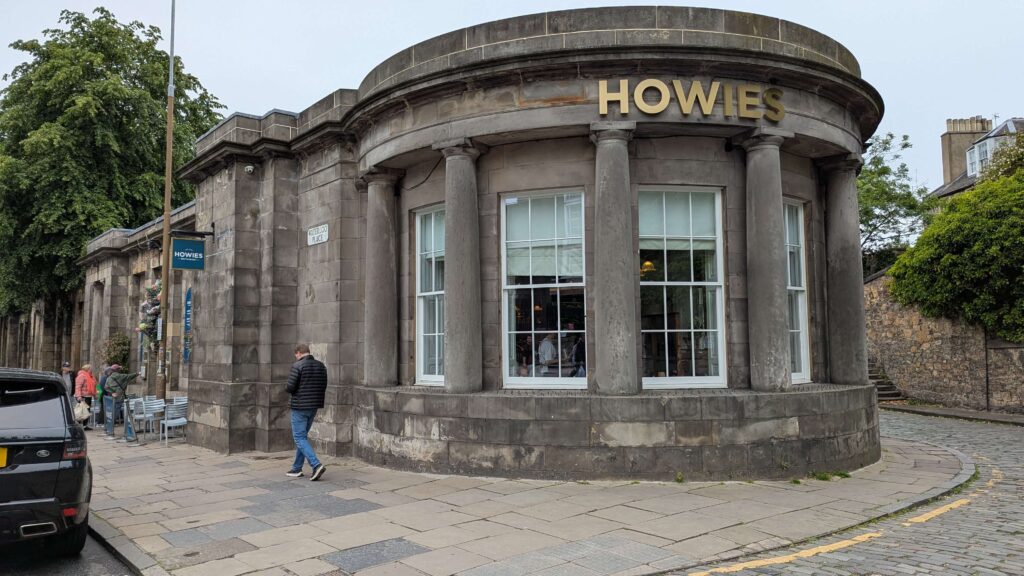
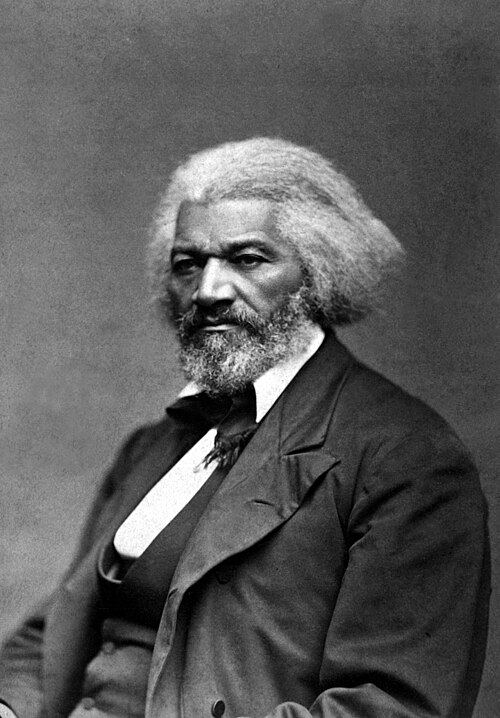
On May 1, 1846, a formerly enslaved man from Maryland stood in the Waterloo Rooms at this address and addressed a public breakfast hosted by the Edinburgh Ladies’ Emancipation Society. Frederick Douglass, escaped slave, author, orator, and the most photographed American of the nineteenth century, had come to Scotland as part of a British tour, and Edinburgh became one of his most important platforms.
Douglass spoke here and across the city and Scotland demanding the Free Church of Scotland “send back the money” it had received from slaveholding congregations. His Edinburgh campaign helped turn Scottish opinion against slavery, contributing to the international pressure that contributed to abolition. You can also find a portrait of Douglass at 33 Gilmore Place, near the location of where he stayed while in Edinburgh (see also our Black Live Matters trail).
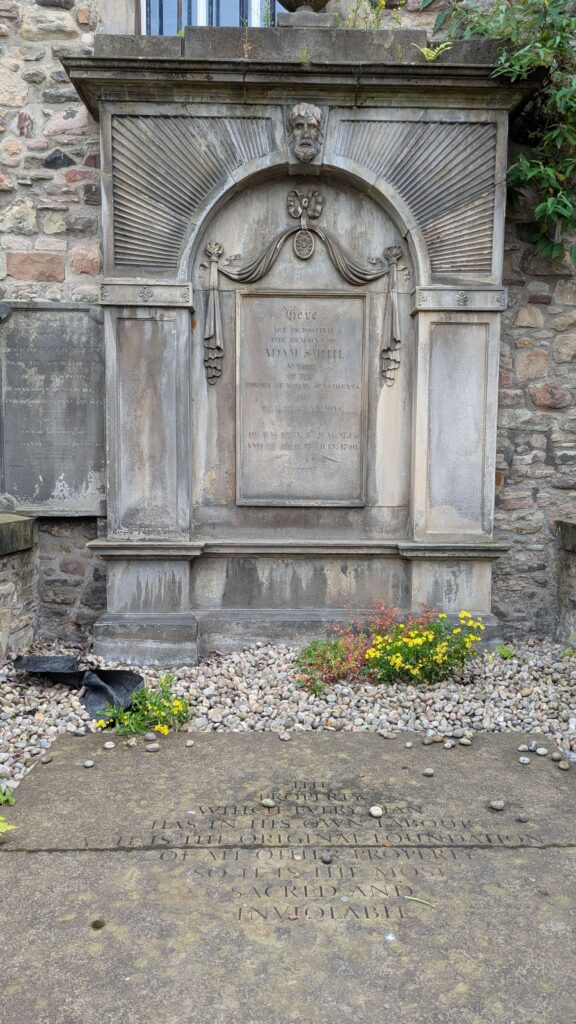
In this churchyard lies the man whose ideas shaped American capitalism. Adam Smith published The Wealth of Nations in 1776, the same year as the Declaration of Independence, and the two documents together helped define the intellectual architecture of the modern world.
Smith argued that free exchange, the division of labor, and self-interest channeled through markets could generate prosperity far more effectively than mercantilist state control. George Washington owned a copy. Alexander Hamilton, the first U.S. Treasury Secretary, drew on Smith while building his own ideas on how to order America’s financial system.
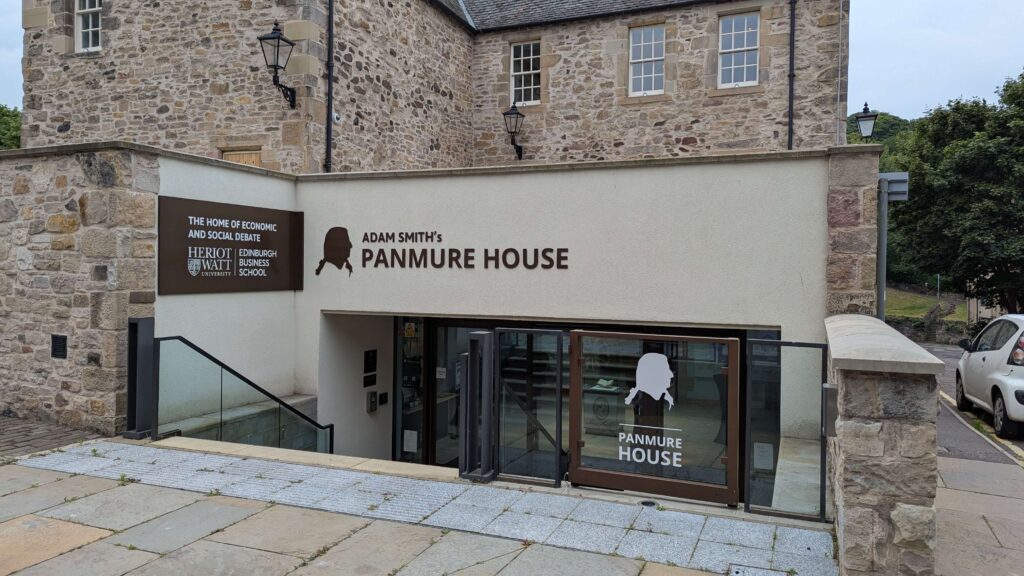
After finding the grave, head over to 4 Lochend Close to visit Panmure House, a 17th century townhome which served as the residence of Adam Smith from 1778 until his death in 1790. Now a part of Heriot-Watt University, Panmure House is where Smith finished the later editions of his magnus opus.
Note: The map directions take you to Panmure House; Smith’s grave is located next to the Canongate Kirk and Kirkyward (coordinates 55.95166870613089, -3.1788883917621726).
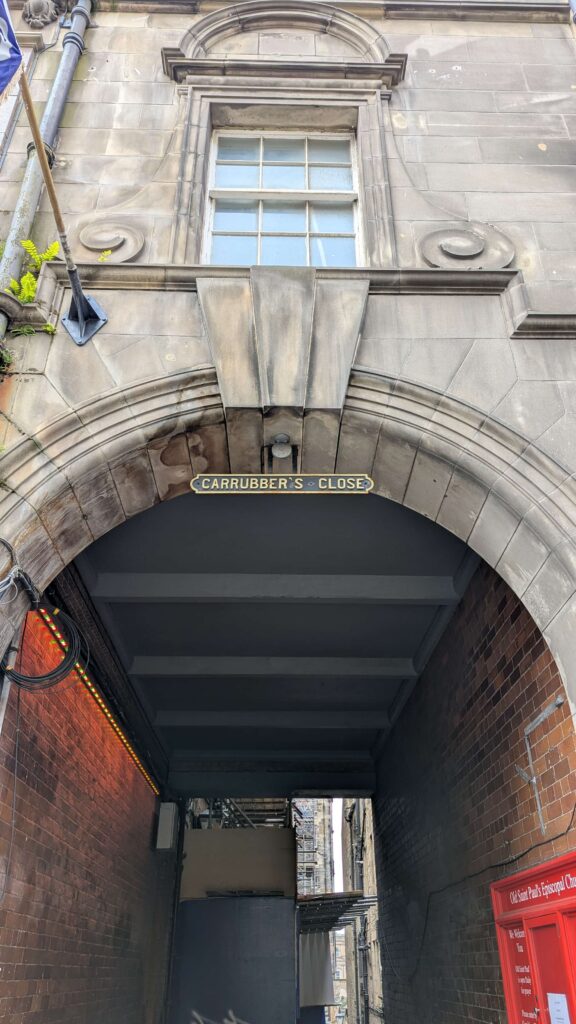
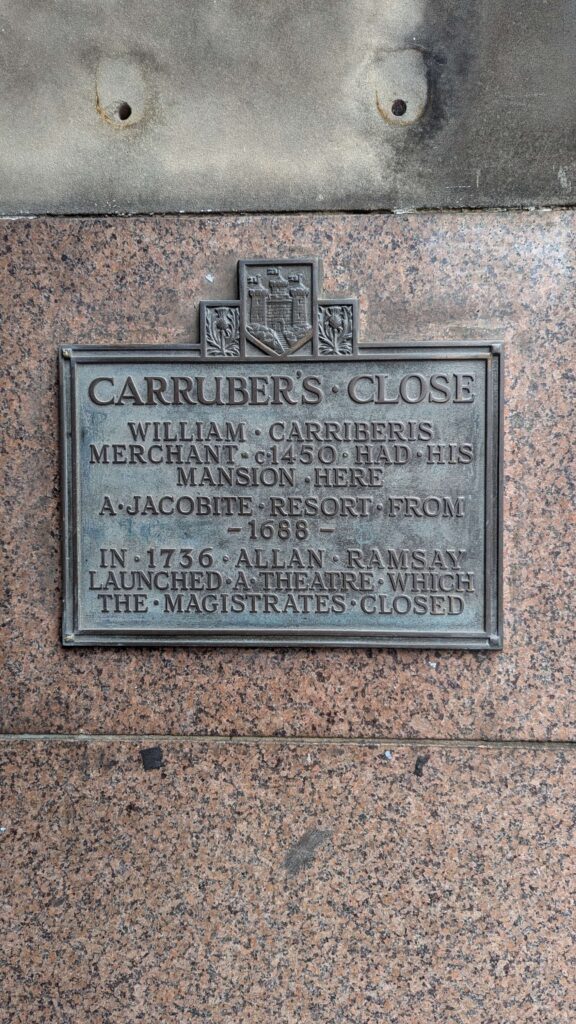
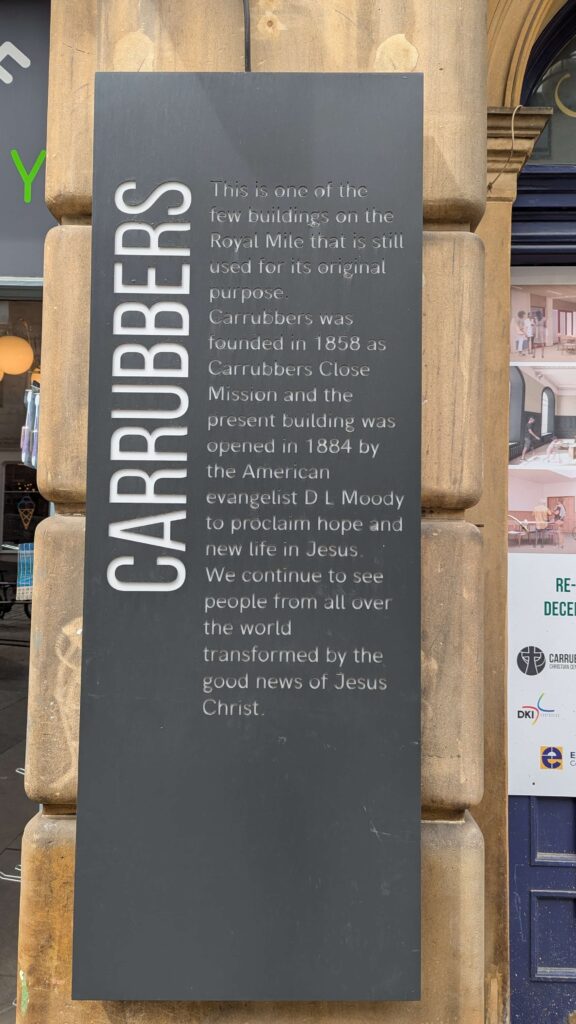
In 1872, Dwight L. Moody, a self-educated shoe salesman from Massachusetts turned global preacher, visited during a revival campaign and was so struck by the Carrubbers Close Mission, which did not have a permanent home, that he declared: “You can’t run a mission on air!” He raised £10,000 (around £1 million today), laid the foundation stone himself in 1883, and preached the building’s first sermon.
Moody’s Edinburgh campaigns of the 1870s and 1880s helped shape Scottish religious and social life by raising church attendance, inspiring welfare work among the poor, and influencing a generation of ministers. Ira Sankey, who shared a close association with Moody, is believed to have introduced gospel music to Scotland.
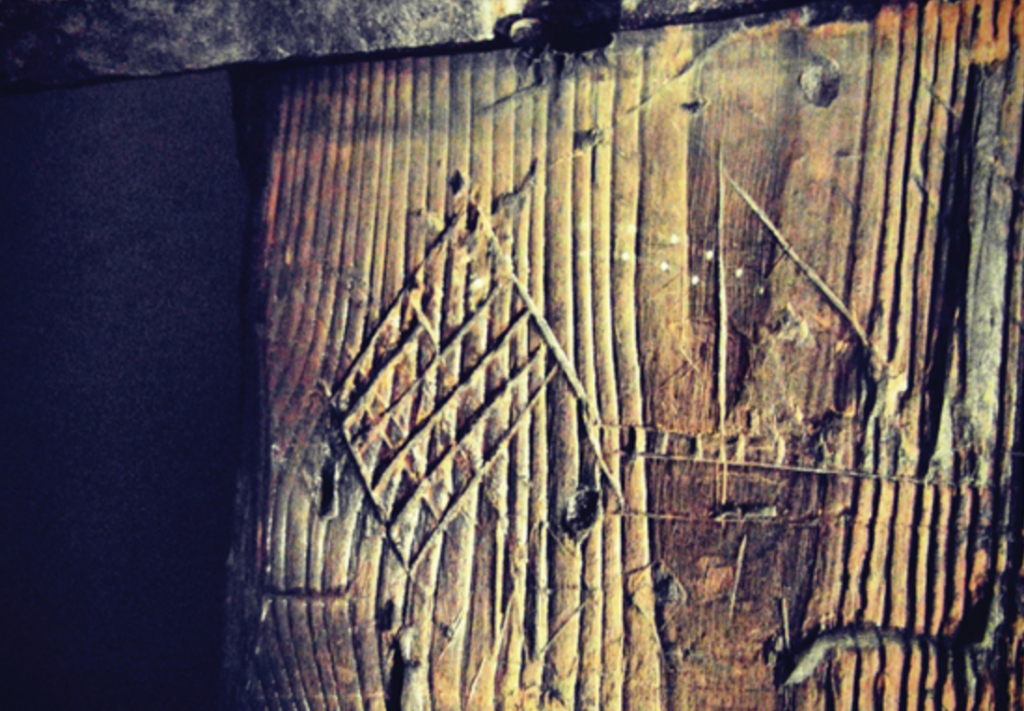
Edinburgh Castle held prisoners of war during the American Revolutionary War and among them were captured American sailors. One left a remarkable mark: scratched into the heavy wooden prison doors is what is believed to be one of the earliest known depictions of the Stars and Stripes, carved by a prisoner who likely never saw his new nation’s flag officially adopted.
The doors are now on display inside the castle. This small act of defiance, a sailor affirming his allegiance to a republic that barely existed, is a quietly extraordinary artefact of the war that created America. It reminds us that the struggle for independence was not abstract: it was personal and reached all the way to the prisons of Edinburgh’s formidable castle.
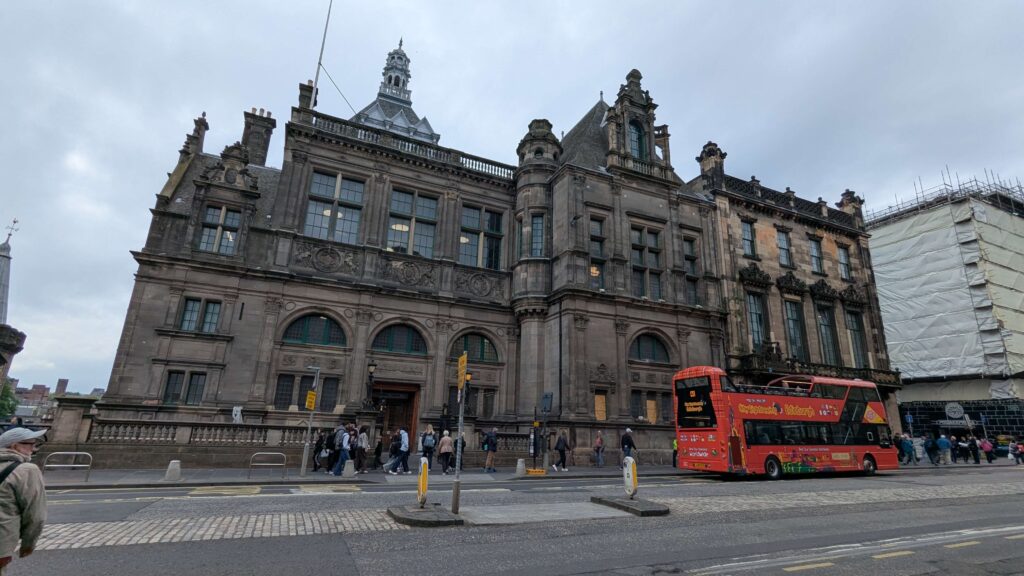
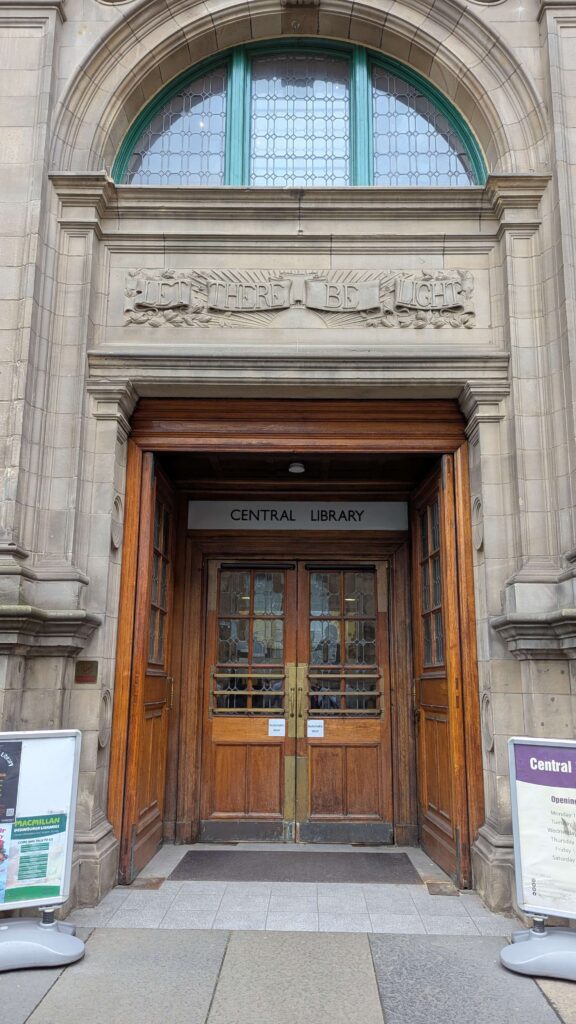
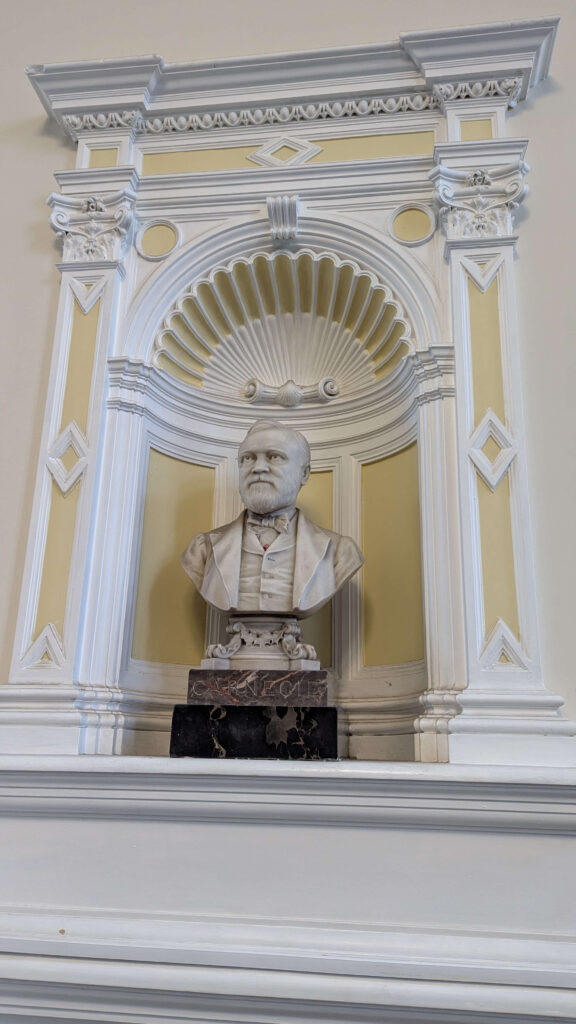
This building, the most-used public library in Edinburgh, was a gift from Andrew Carnegie, who built one of America’s greatest fortunes and then gave most of it away. Carnegie was born in Dunfermline in 1835, emigrated to Pennsylvania, and became a steel magnate. His philanthropy was on a scale the world had never seen, with over $350 million donated by his death, including more than 3,000 public libraries worldwide.
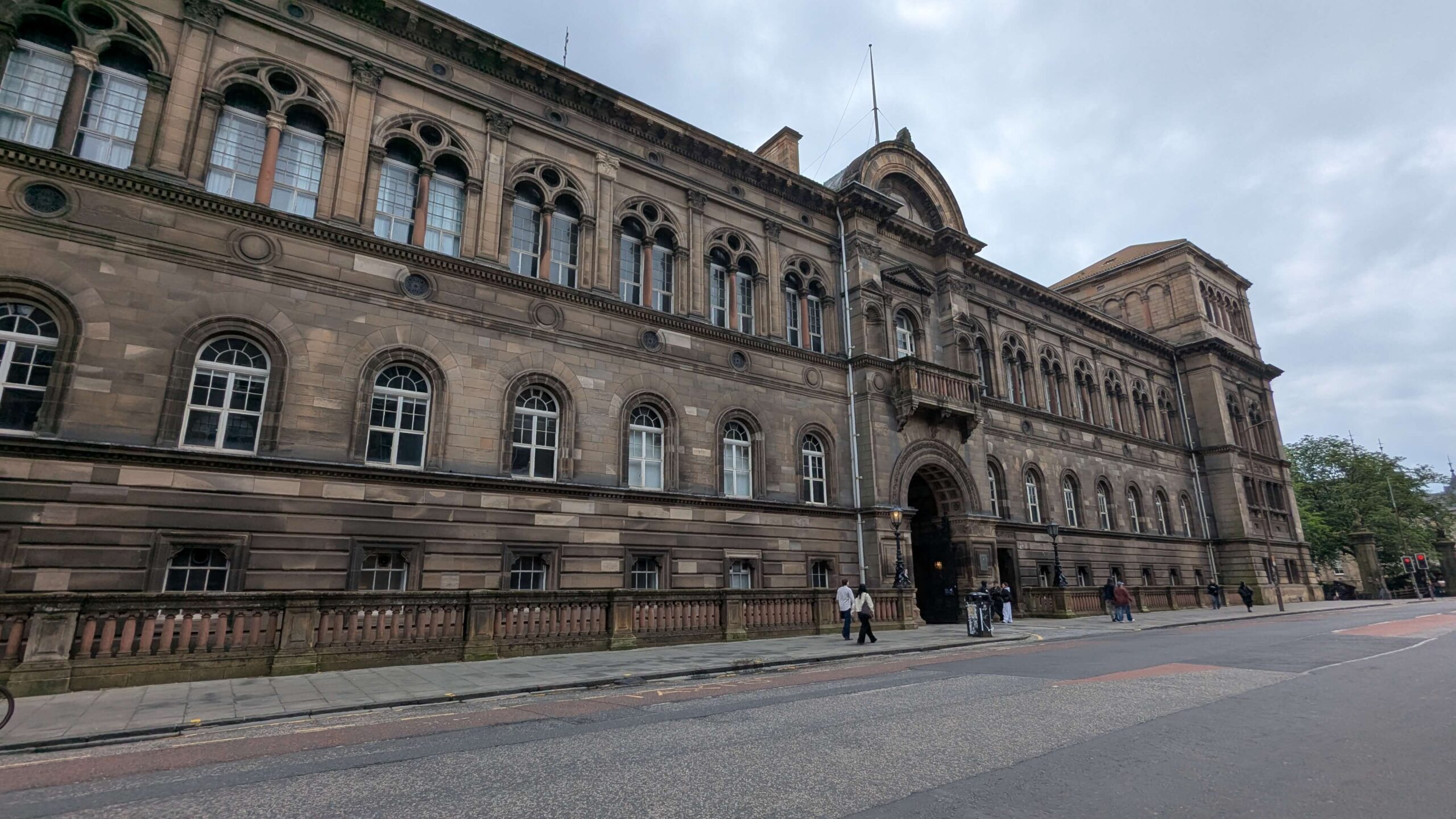
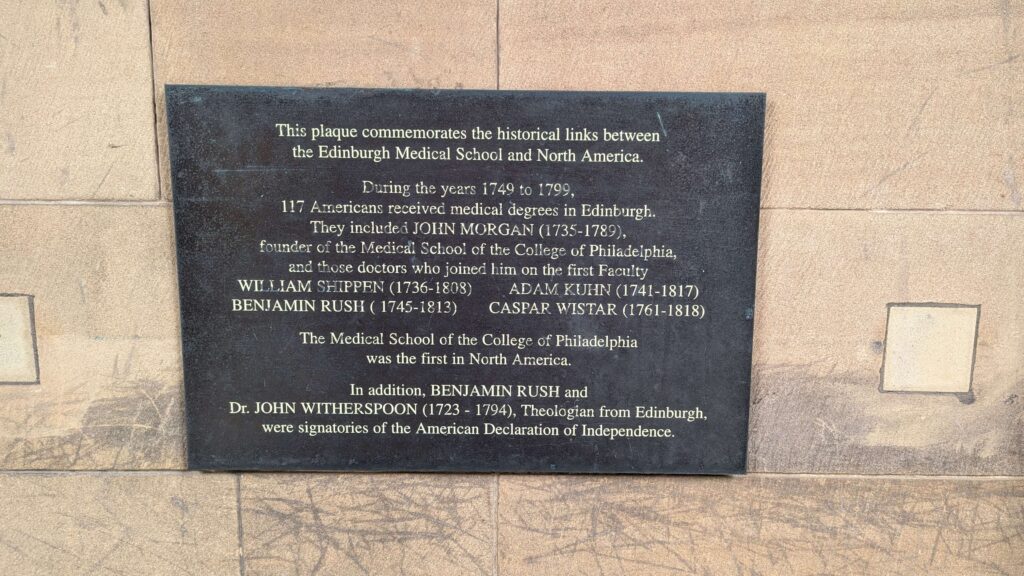
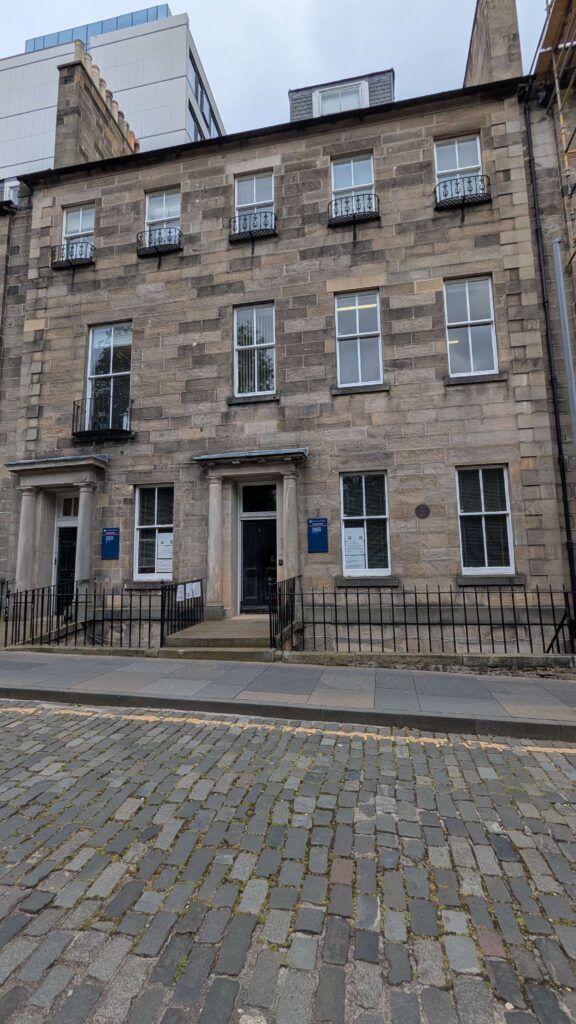
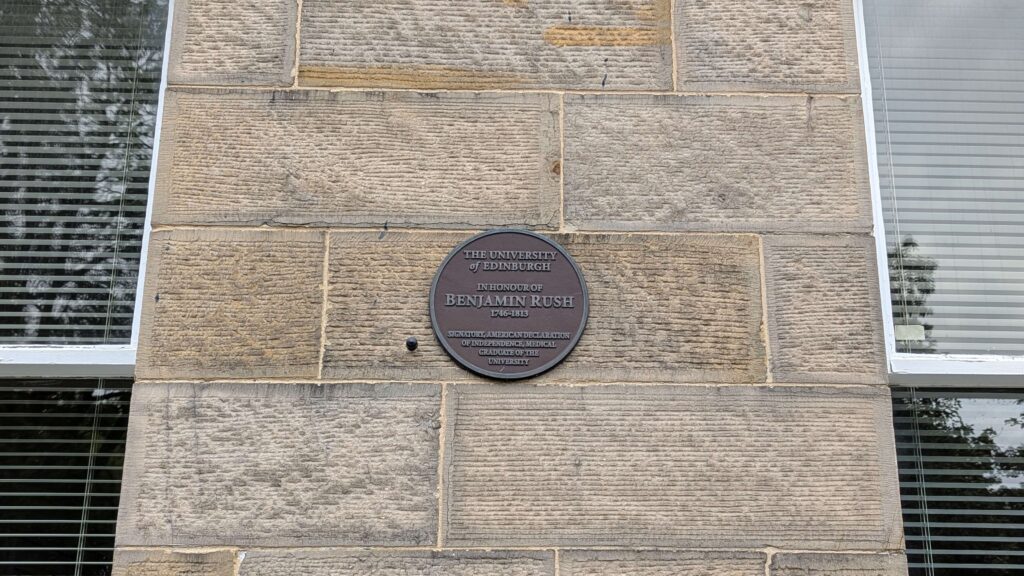
A plaque on the facade of the Old Medical School on Teviot Place marks one of the most direct connections between Edinburgh and the creation of the United States. Two signatories of the Declaration of Independence, Benjamin Rush and John Witherspoon, studied at the University of Edinburgh, and this building stands at the heart of the medical school where Rush spent what he called “the most important two years of my life.”
Granton:hub were awarded funding from Sustrans for a mural designed by Eve Murray telling the story on the history and culture of Granton.
1. Granton Oils – Manufactured inks in the late 1800’s with such success that it operated on a global scale.
2. Esparto grass – Esparto grass was a key component of paper production. Imports started in the 1870’s and by the 1950’s roughly a third of all UK imports came through Granton.
3. Ship – A reference to William Speirs Bruce and his work explained in the previous stop.
4. Fishing boat – trawling began with sail boats in the 1840’s and steam trawlers followed around the 1880’s. By the 1950’s approximately 17,000 tons of fish were passing through Granton harbour every year.
5. Train tracks – The long-abandoned Edinburgh, Leith and Newhaven Railway line, 1846-1925. its position in relation to the lighthouse suggests a beam of light, a connection, as well as the world’s first train ferry, the Leviathan, operational from 1849 to 1890 when the Forth rail bridge was completed.
6. Lighthouse – provides a symbol of the many lighthouses of Scotland that received goods and equipment delivered by the Pharos which berthed in Granton Harbour opposite Granton Lighthouse.
7. Gasworks – Built between 1898 and 1902. An example of Victorian architecture that has been given listed structure status and is now refurbished into a multi-functional public space.
8. 1507 – the date enclosed within a four-masted “carving” of a ship is a reference to the Great Michael. She was laid down at a purpose-built dock in Newhaven 1507 and completed in 1512. She was the largest war ship of her time. It is believed that her construction required all but one of the woods of Fife as well as timber sourced from other parts of Scotland, Norway, and France.
Across the road is the location of The Pitt Market which is open Friday to Sunday. if you now return to stop 17, for Caroline Park, you can finish the walking tour and visit two more locations taking you back to Madelvic House where the tour started.
Walk from Caroline Park house to this new walkway. This is named after William Speirs Bruce (1867-1921) one of the foremost, and most successful, polar scientists of his age. He left his medical studies at the University of Edinburgh and joined the 1892-3 Dundee Whaling Expedition as a scientific observer and naturalist. From 1894-96 Bruce worked at the Ben Nevis Summit Meteorological Station, gaining valuable experience in scientific procedures and in using meteorological instruments. Between 1896 and 1897 he was part of several Arctic expeditions, to Franz Josef Land, Novaya Zemlya and Spitsbergen.
Somehow Bruce also had the time to found the Scottish Ski Club, and to co-found Edinburgh Zoo. It was with the help of fellow founder Edward Salvesen, who had family connections with the whaling industry, that Bruce was able to bring the first ever penguins to Corstorphine Hill.
Overlooked for Captain RF Scott’s British Antarctic Expedition, Bruce decided he would lead his own. In 1902 The Scottish National Antarctic Expedition sailed from Troon on The Scotia. Bruce and his team built two scientific and metrological observatories on Laurie Island. These are the oldest metrological stations in Antarctica amd have provided the longest prolonged recording of temperature in the region.
A recent re-appraisal of the Scottish National Antarctic Expedition of 1902-4 recognises its importance as a foundation of climate change study, and of William Speirs Bruce as a pioneer of Polar research. Today he is commemorated by The Bruce Memorial Prize, for Polar Scientists; Cape Bruce, in the Franz Josef Land archipelago; the Orcada Weather Station, Laurie Island, Antarctica; and by this public footpath that leads to the shore.
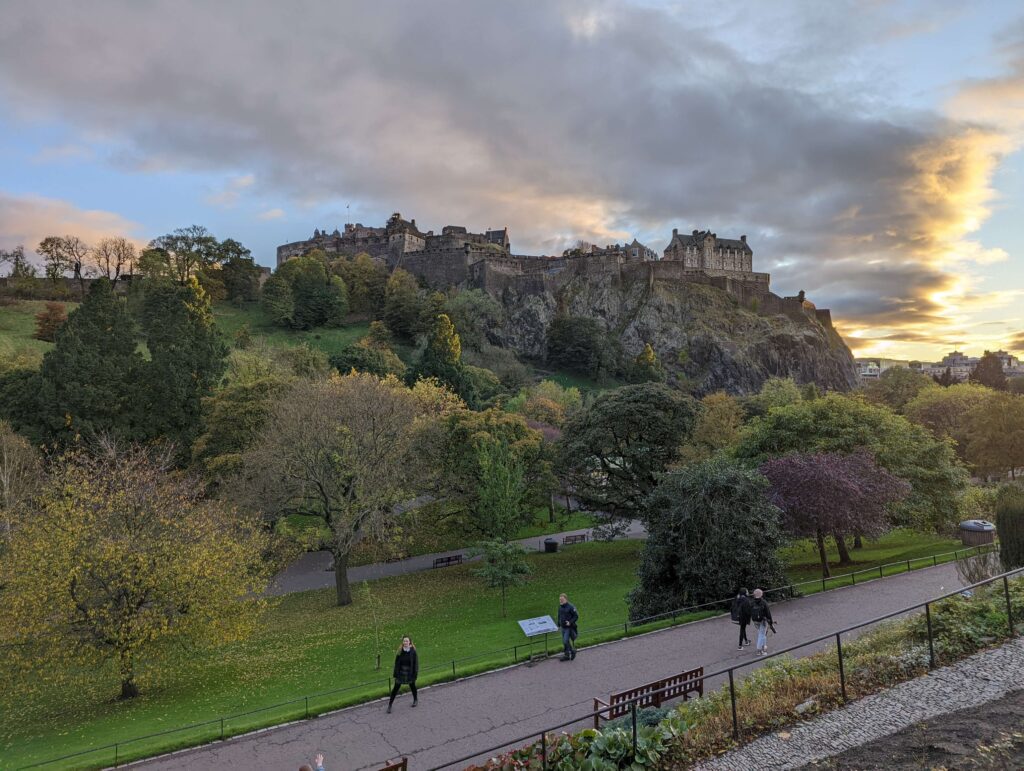
Walk to the intersection with Princes Street at the end of the block and consider the words of two notable American writers as they expressed their feelings of deep affection for the city of Edinburgh.
The first is Washington Irving, best known for his short stories Rip van Winkle and The Legend of Sleepy Hollow. Irving visited Edinburgh in 1817, and this is what he wrote: “I am enchanted with the general appearance of the place. It far surpasses all my expectations. Yesterday was a warm day, with now and then a very light shower, and an atmosphere loaded with rich clouds through which the sunshine fell in broad masses, giving an endless diversity of light and shadow to the grand romantic features of this town. It seemed as if the rock and castle assumed a new aspect everytime I looked at them, and Arthur’s Seat was perfect witchcraft. I rambled about the Bridges and Calton Height yesterday, in a perfect intoxication of the mind.”
The other writer is the novelist Henry James, best known as author of The Turn of the Screw, who composed an equally romantic account of his impression of Edinburgh when he visited the city in 1878. “The night of my arrival here was a superb one; the full moon had the possession of a cloudless sky. There is no street in Europe more spectacular than Princes Street, where all the hotels stand in a row. Princes Street was absolutely operatic. The radiant moon hung right above the Castle and the ancient houses that keep it company on its rocky pedestal, and painted them over with a thousand silvery, gray touches. They looked fantastic and ethereal, like the battlements of a magician’s palace.”
Sources:
Tour in Scotland 1817 and Other Manuscript Notes by Washington Irving